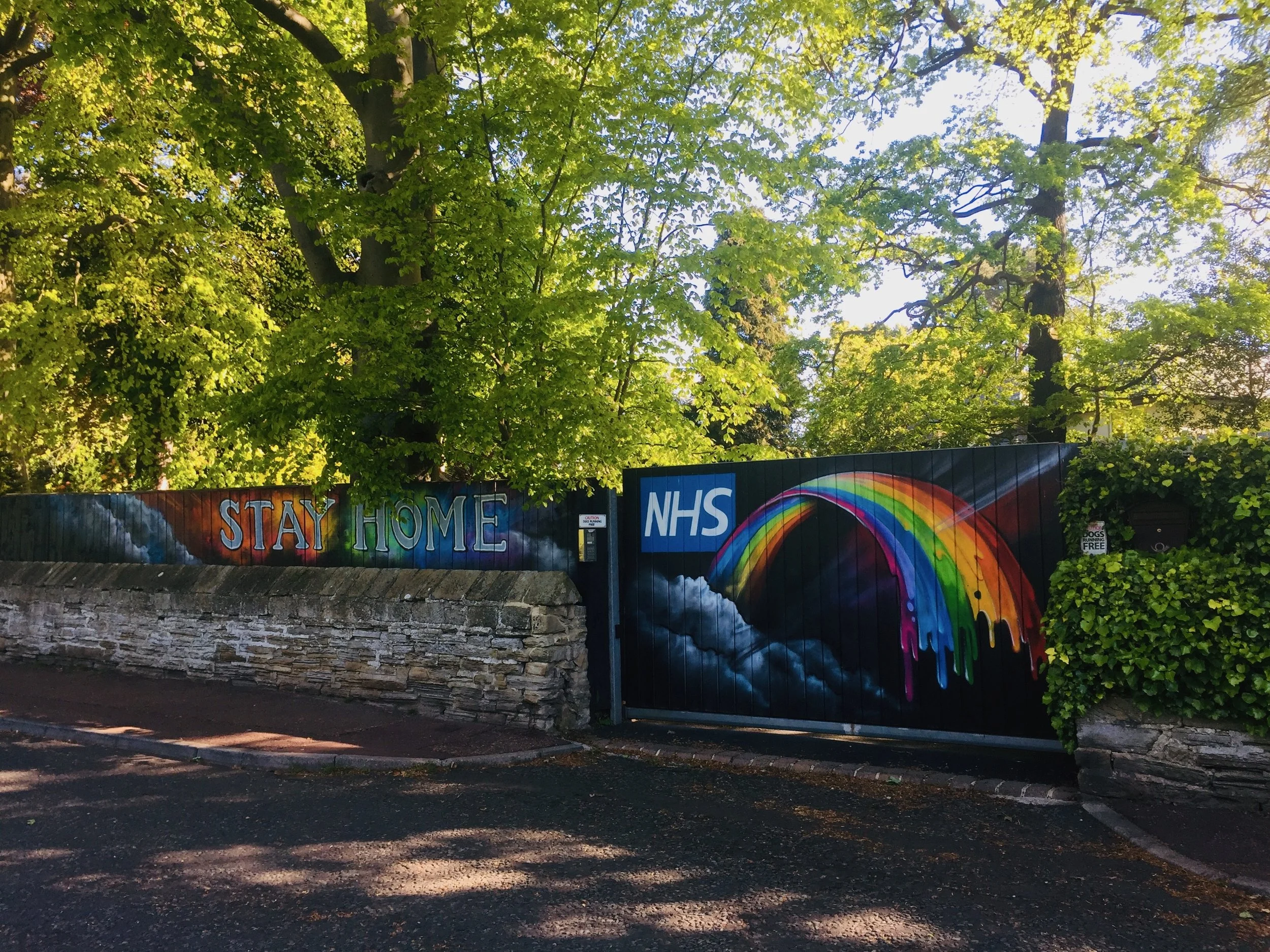
A Covid-era celebration of the NHS.
My long-standing concerns about the future of the NHS have been exacerbated in recent weeks and months. Less than a year ago the dental practice, which we have been attending since my children were little, suddenly announced that it was going fully private and would no longer offer dental check-ups or treatment on the NHS. I spent several frantic days searching for an alternative NHS practice but found that none of the dentists in our area were taking on NHS patients. As a result we were forced to 'go private' or have no regular dental care at all. When I vented about this to my parents they told me that the same thing had happened in Leeds a few years ago and that several family members had been forced into a similar situation. In certain areas, then, the NHS is already starting to disappear.
Where it is still functioning there are problems too. A relative was taken into hospital recently following a fall which resulted in a minor fracture. Within a week or two of being in hospital she was in a worse state than when she had been admitted, having acquired two pressure sores. These arose because there were not enough staff members on the ward to adjust her position on a regular basis. I do not blame the nursing staff and health care assistants themselves. The problem lies with those in charge in the hospitals and, ultimately, with the government which starves the NHS of funds 'in the public interest' calling it 'efficiency'. Our relative has now been moved to a different hospital where the staff are trying to put right the painful consequences of the earlier lapse in care, but it is not easy for them. Over the May Bank Holiday weekends staffing numbers were very low. At times just one member of staff was responsible for the six women in the bay. That staff member needs to ensure that her patients are able to eat their meals, given regular medication, that their wounds are dressed, and that other care is provided. Four of the six women are suffering from hospital delirium, causing them to behave erratically. That staff member's task is impossible.
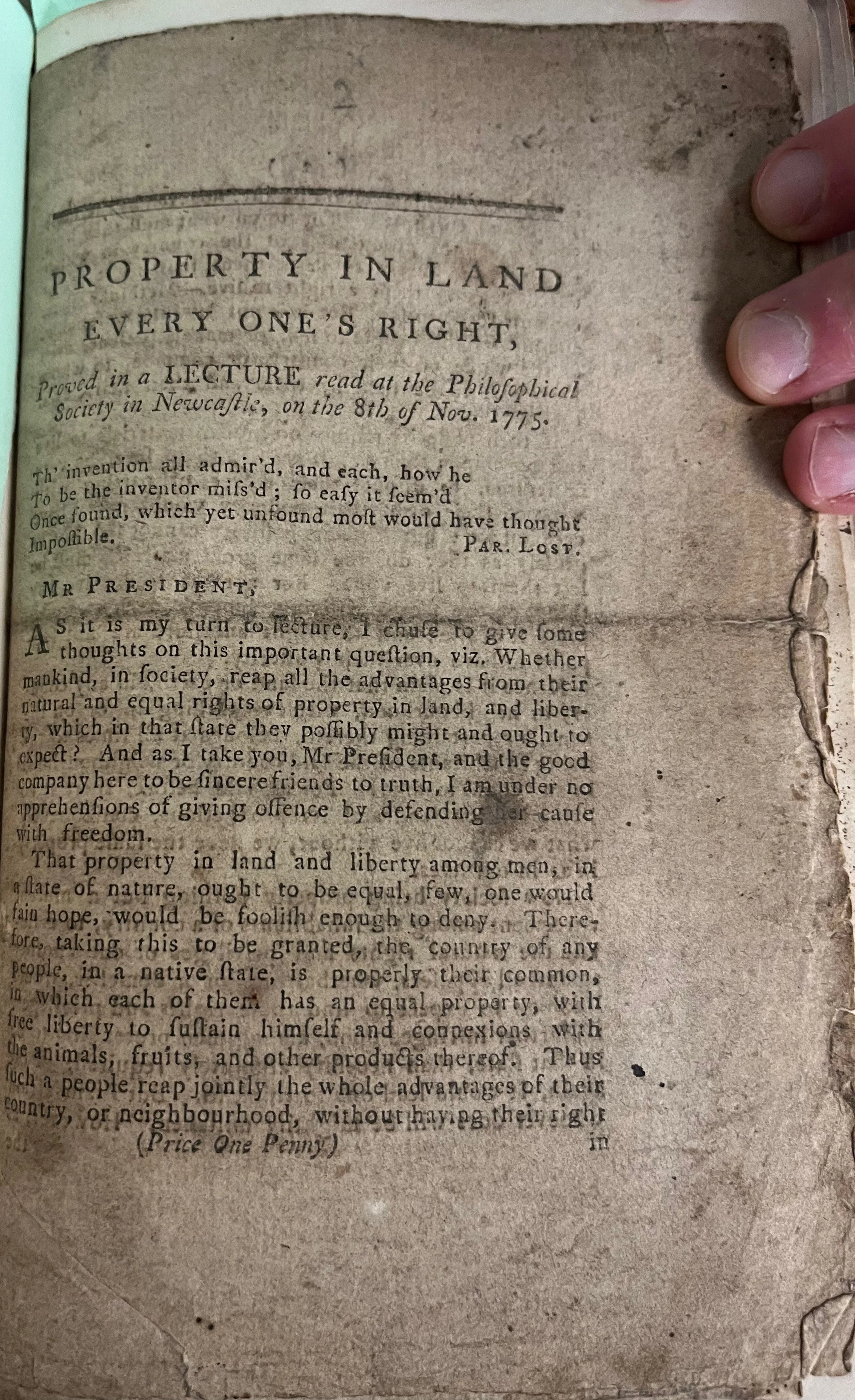
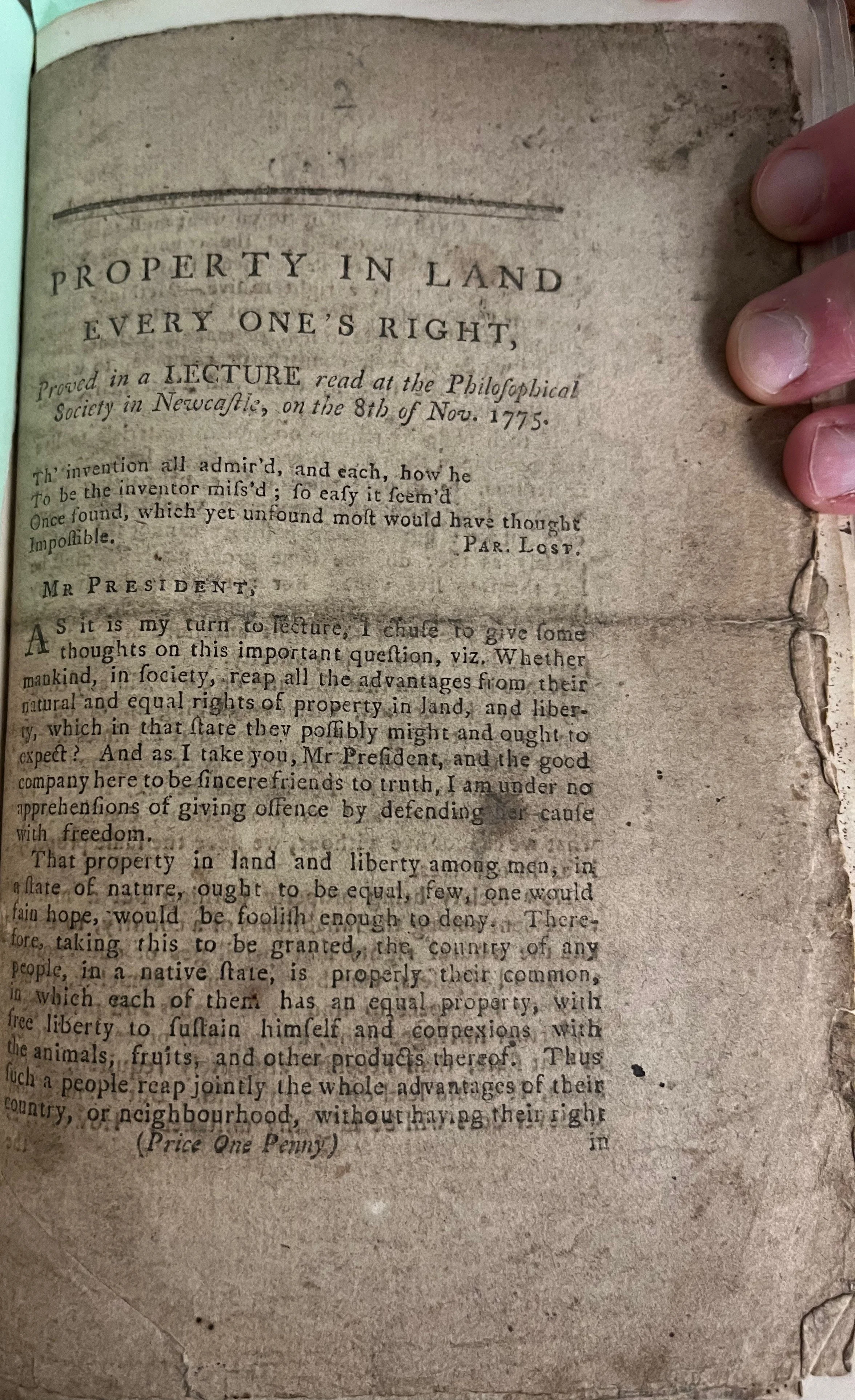
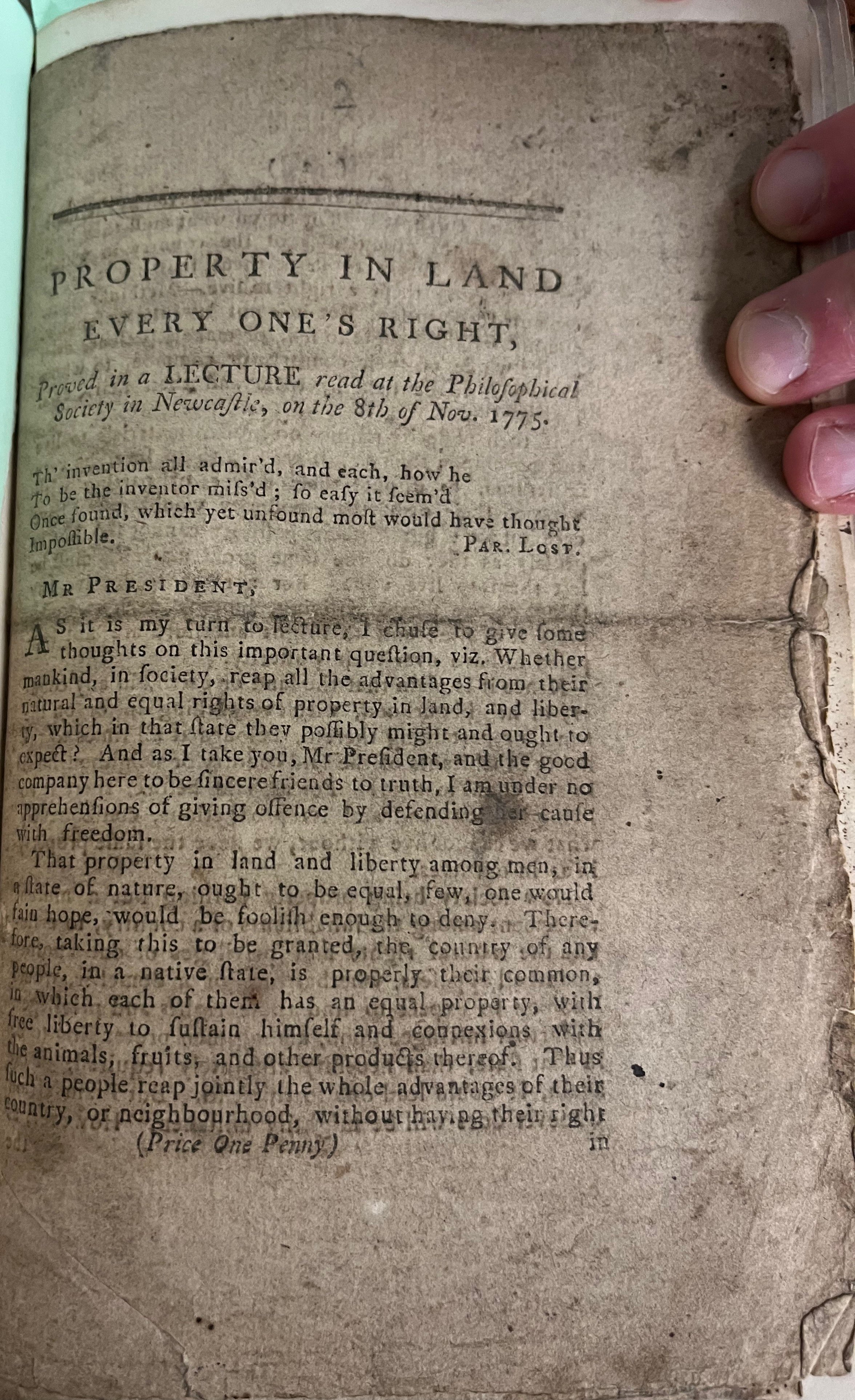
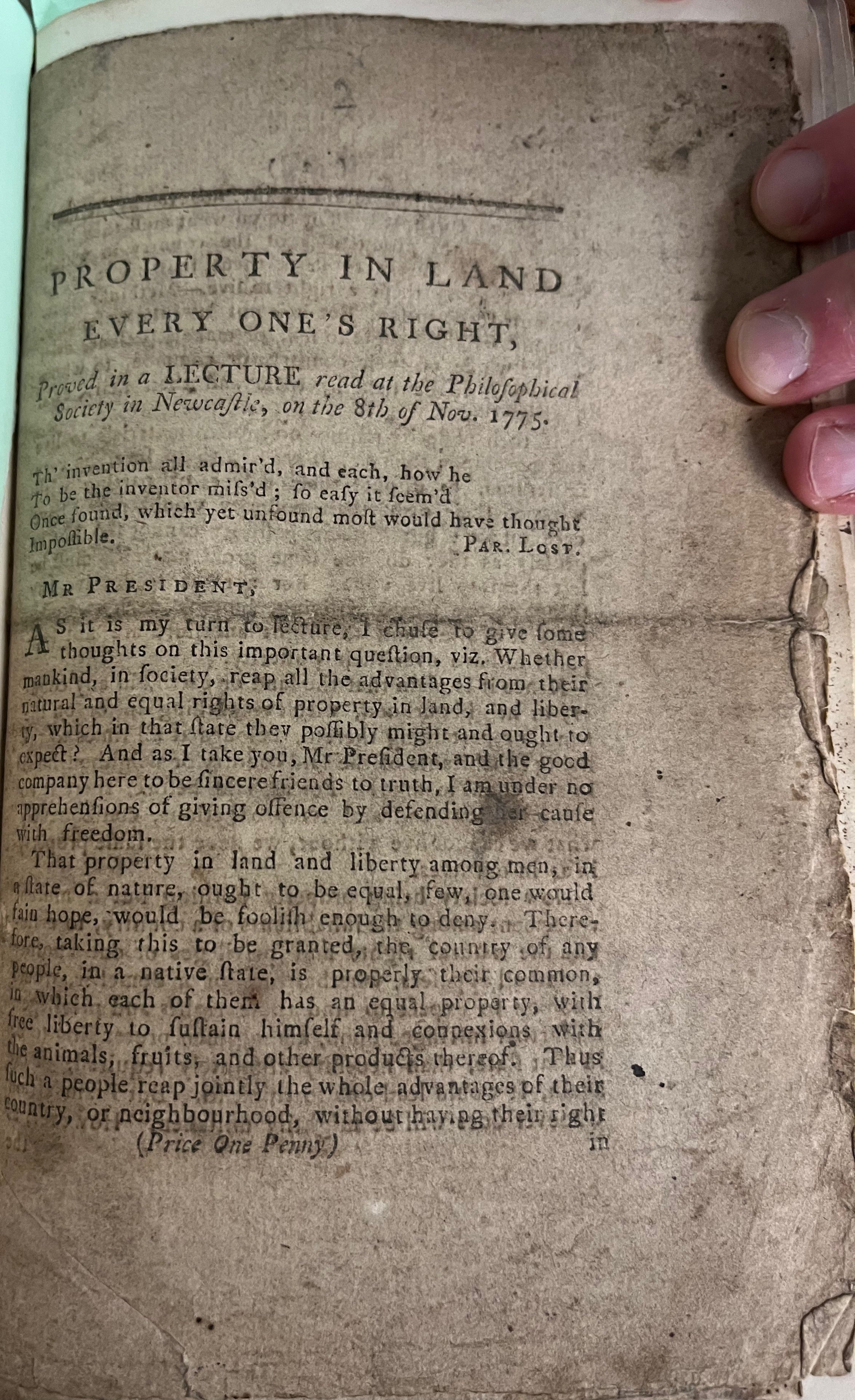
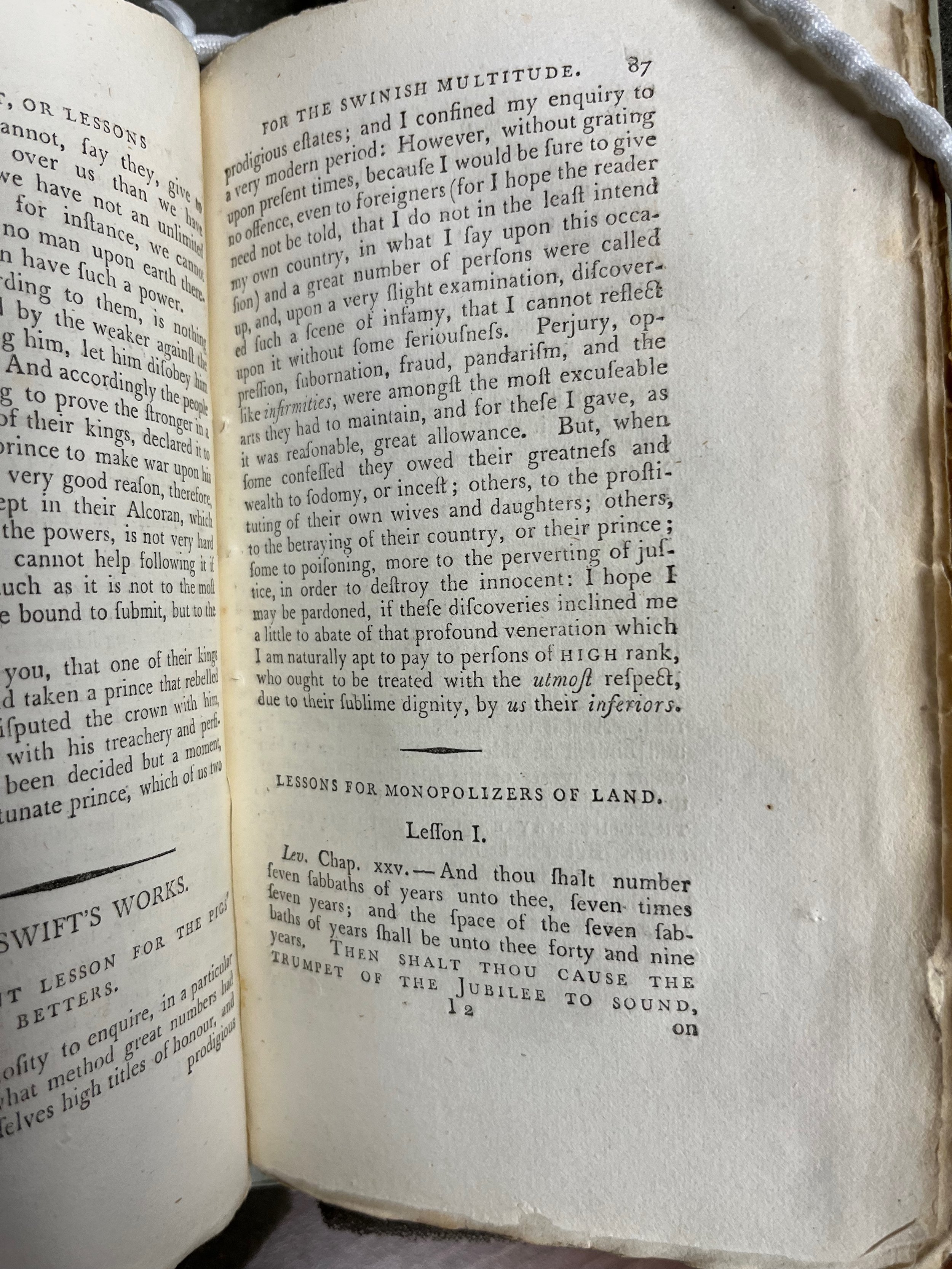
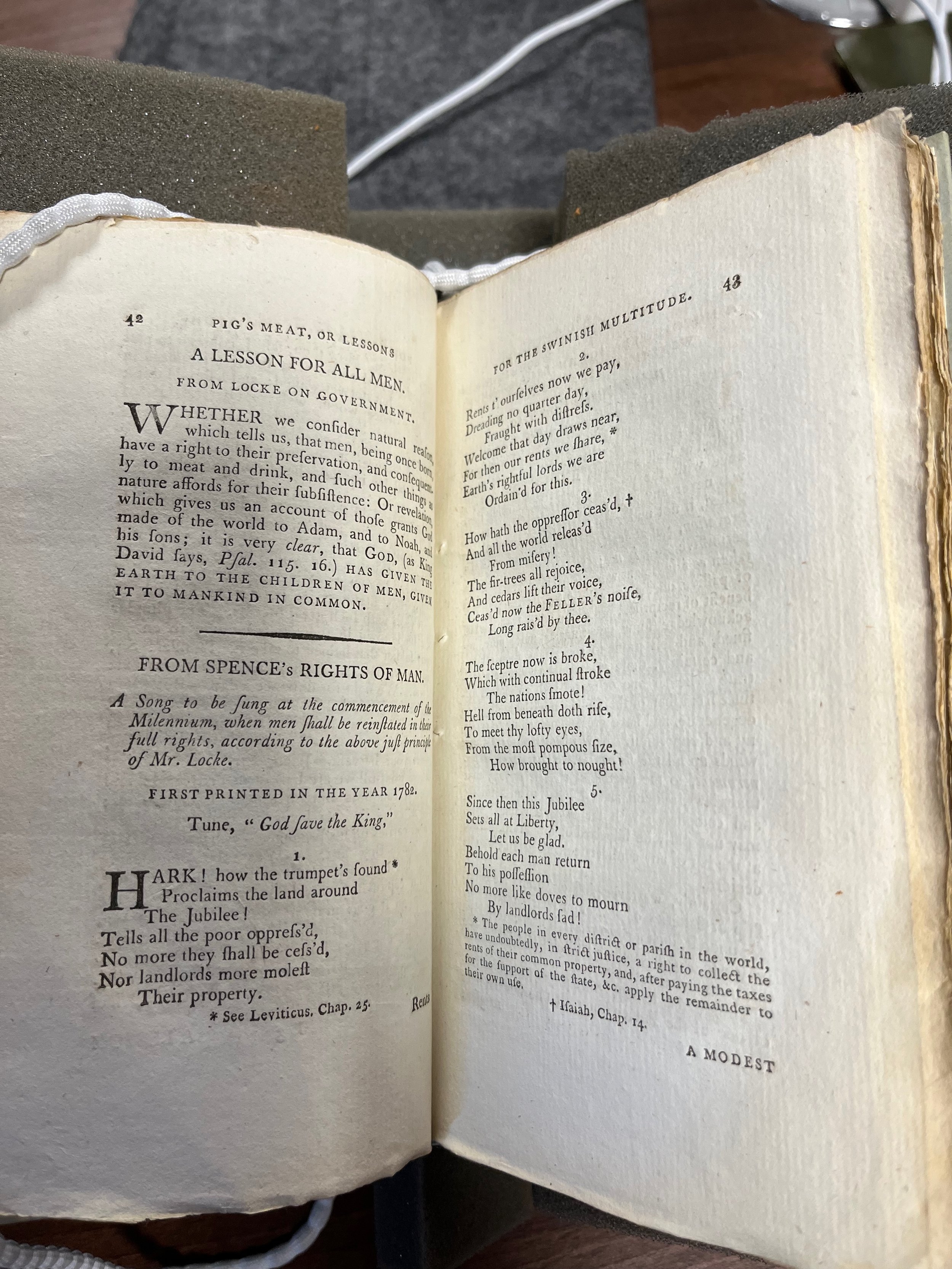
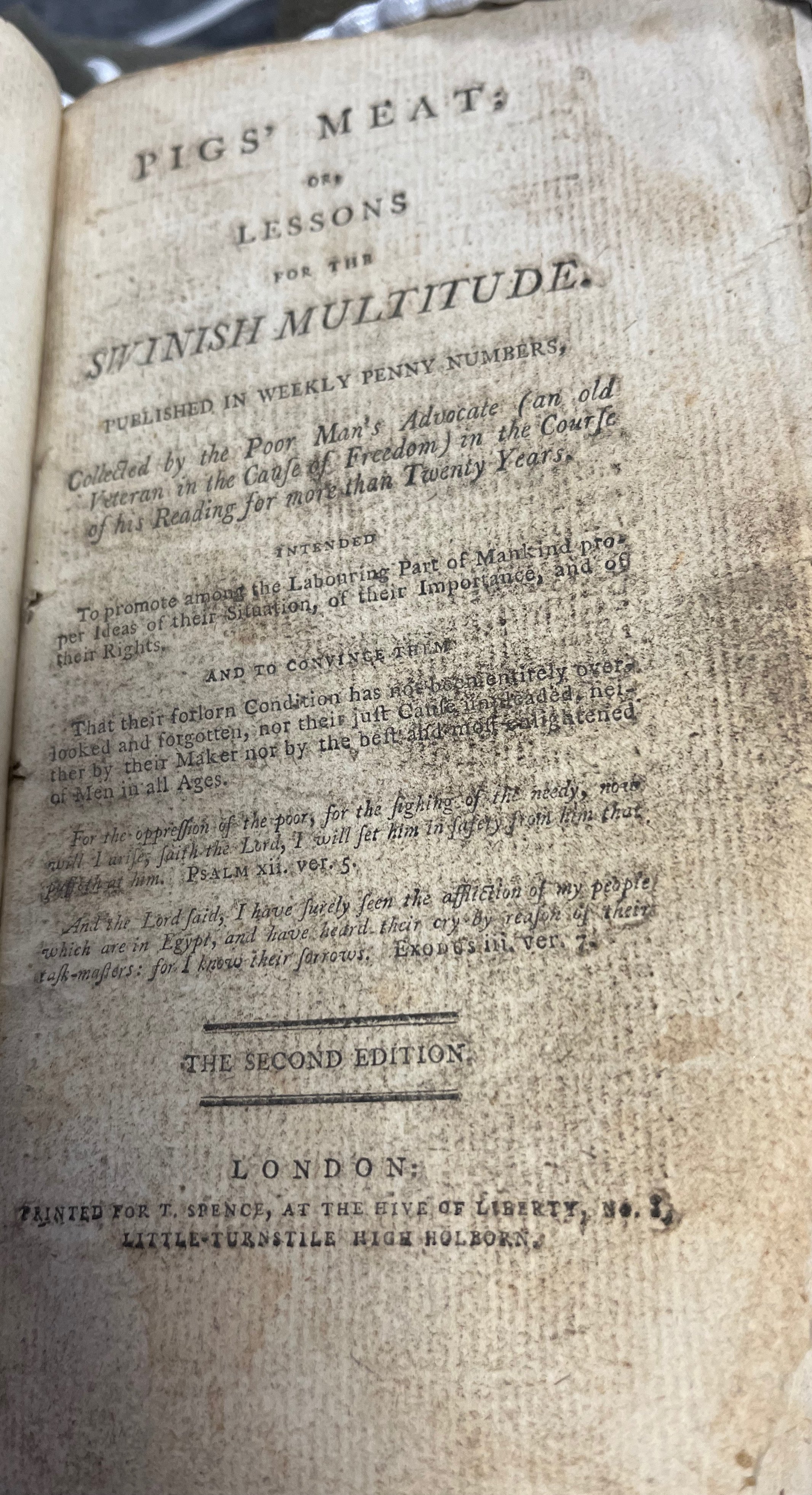
The original 1775 edition of Spence’s Land Plan. Newcastle Literary and Philosophical Society. Reproduced with kind permission.
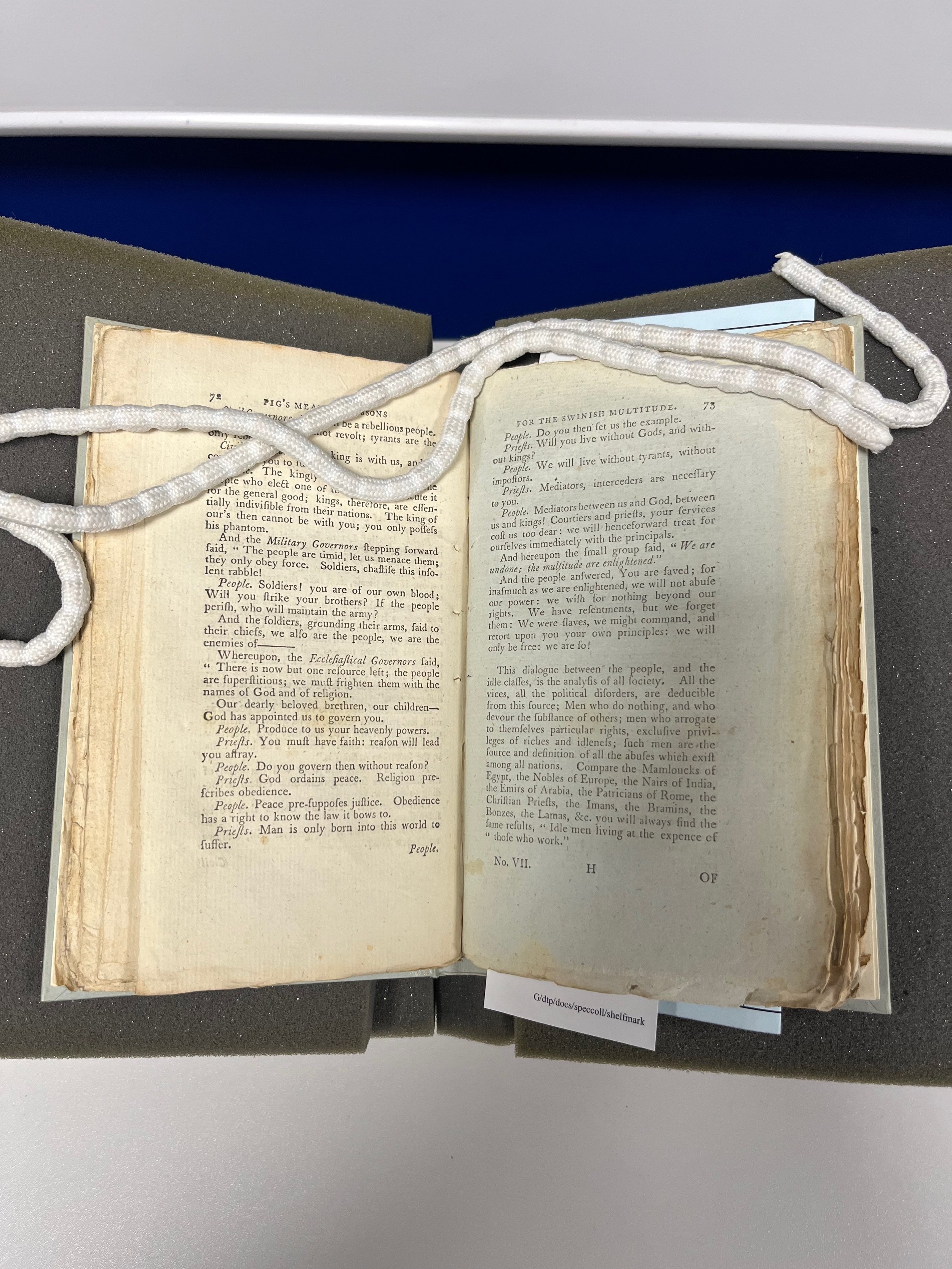
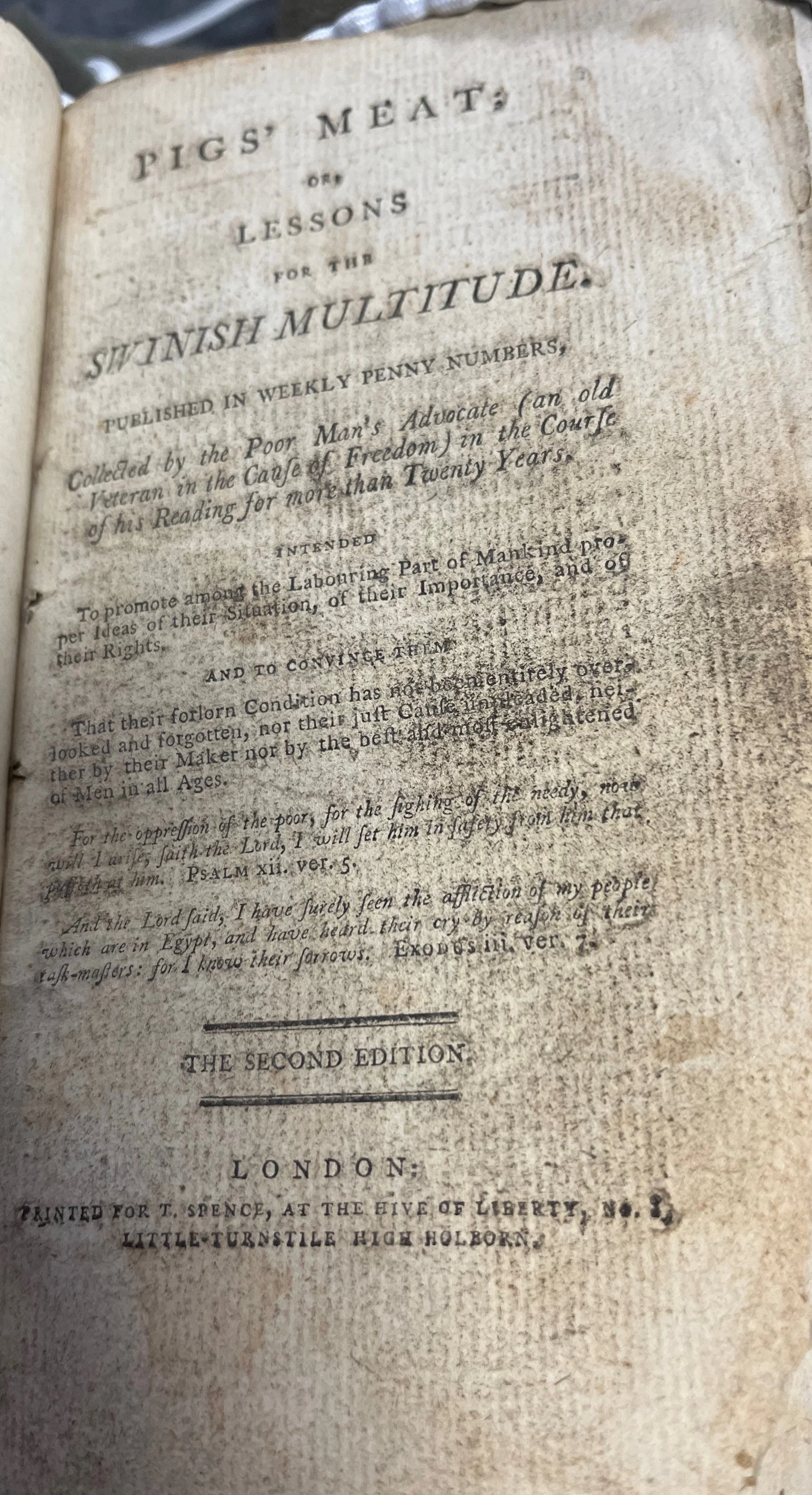
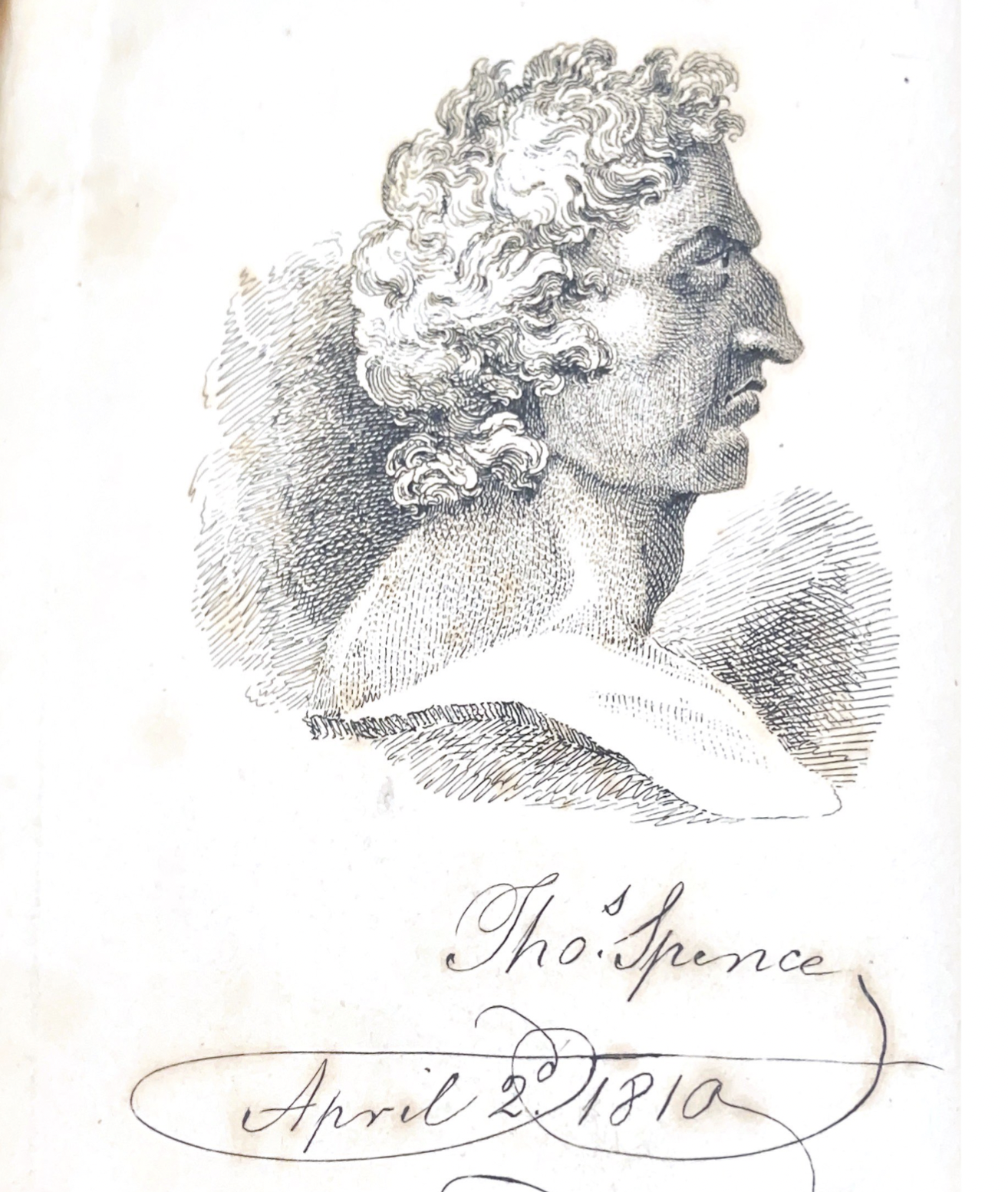
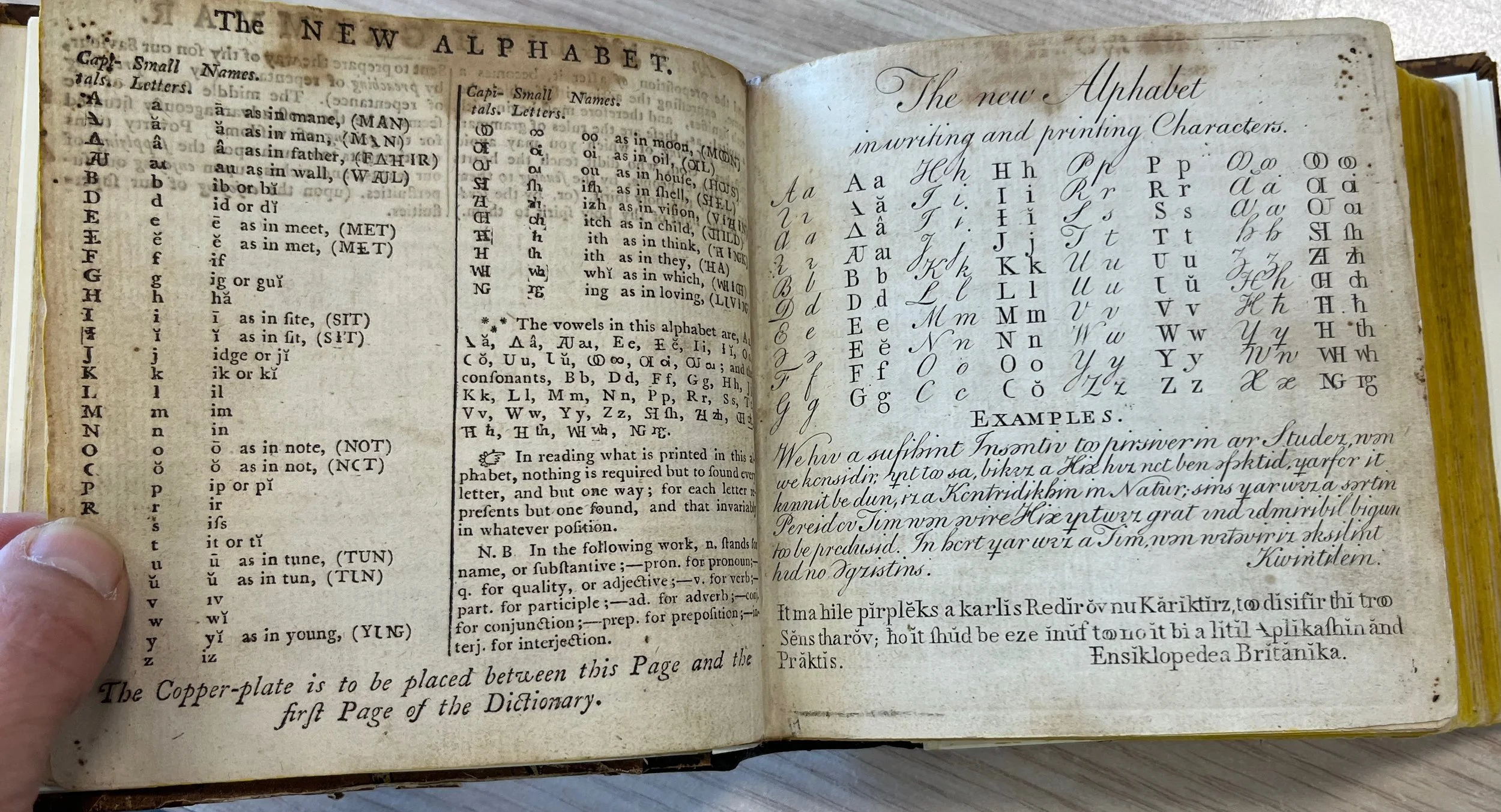
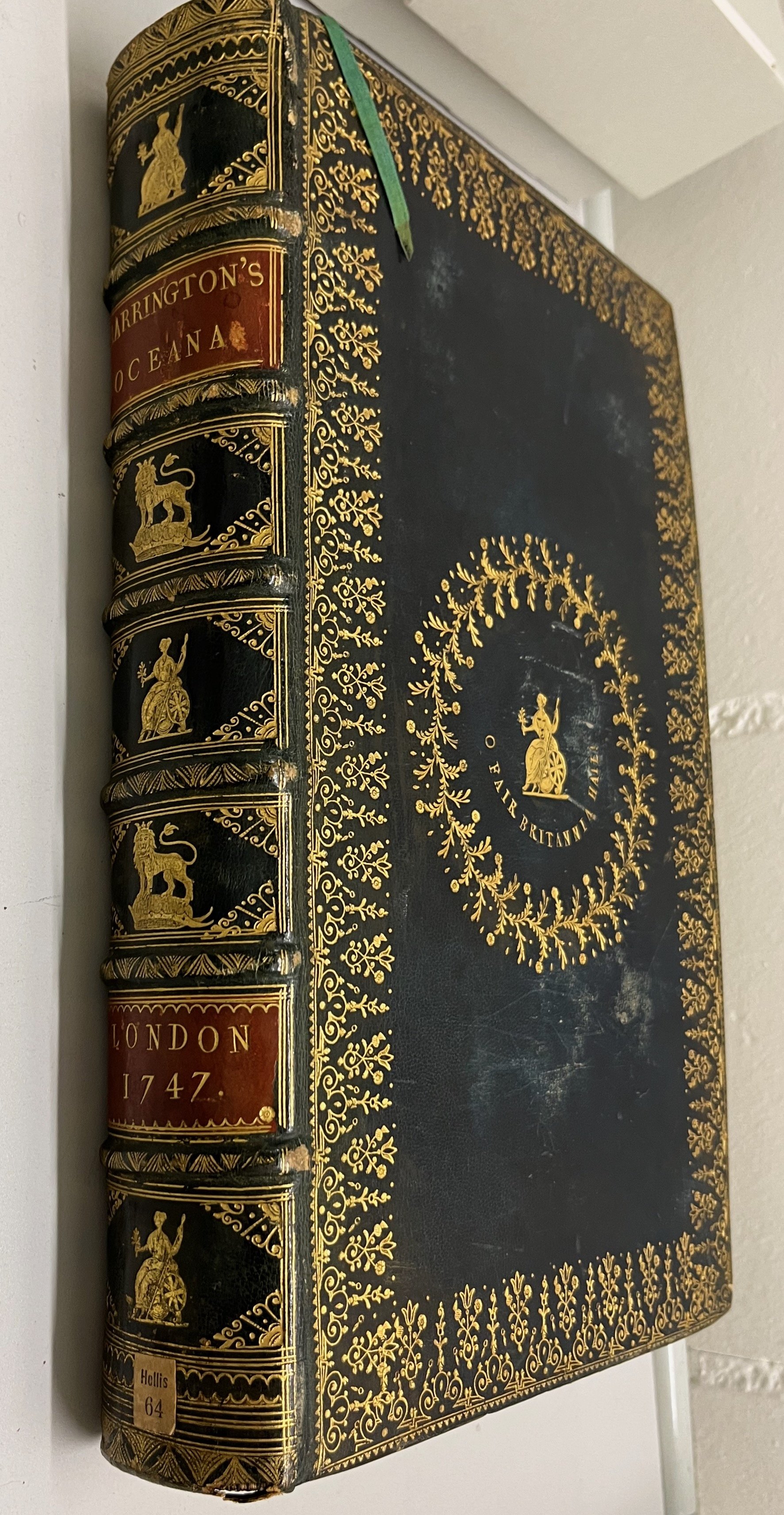
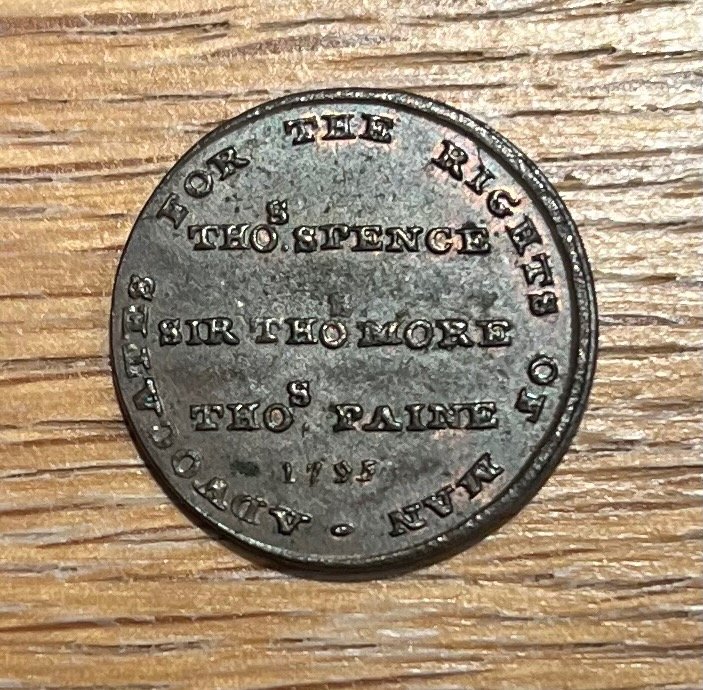
Given all of this, one section of the Spence text I have been reading this month particularly caught my attention. The Restorer of Society to its Natural State is the text for which Spence was charged with seditious libel in April 1801. Organised as a series of letters to a 'fellow citizen' that were purportedly written between July and December 1800, the work addresses the question of how to improve 'the happiness of mankind'. Spence's land plan is presented as the means of achieving that happiness and addressing the pressing issues of the day, including war and the 'artificial famine' that had been thrust on the country. The land plan, which Spence had been advocating since the 1770s when he was a young man in Newcastle, involved abolishing private property in land (while retaining other forms of private property) and instead declaring the land in each parish to be the property of the parish and to be managed by its inhabitants acting as a corporation. Portions of the land would be rented out for cultivation and the money generated used to pay national government costs and to fund local public works, with the remainder divided among all inhabitants (men, women and children). While much of The Restorer of Society repeats the details of this scheme, the advantages it will bring, and the - peaceful - means of bringing it about, some letters deal with more specific issues. This is the case with Letter XIII.
Spence notes that the management of hospitals for the sick is of the greatest importance to the public. Yet he observes that the system then in operation was far from ideal. The governors of hospitals required sick patients to provide 'Letters of recommendation' before they could be admitted. He goes on:
The Difficulties attending the procurement of these recommendatory papers, and
the time and strength wasted about them, are often of the most hurtful tendency to
poor creatures labouring under the accumulated burdens of Disease and poverty
and are certainly the cause of many a Death. (Thomas Spence, The Restorer of Society
to its Natural State. London, 1801, p. 51).
Outpatients were also treated shamefully. They often did not know when the doctor would be available, leading Spence to suggest that if the patient's 'Time be of any value at all' he is better to 'pay for his Medicines elsewhere, than to fret so many hours away in waiting'. Spence is under no allusions as to the intentions behind this inconvenience: 'It is doubtless to deter as many as possible from applying to such places for relief'.
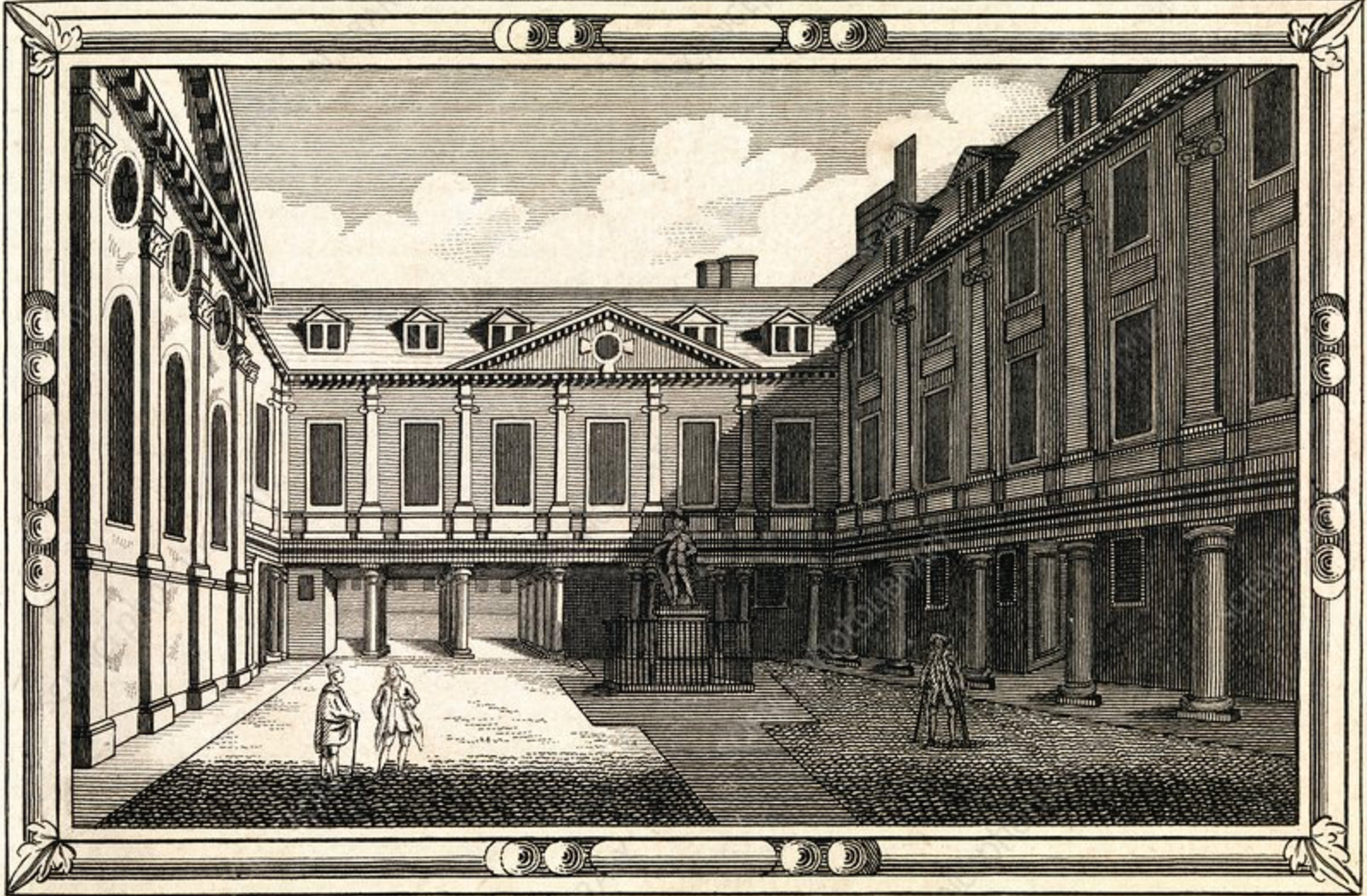
St Thomas’s Hospital, London. Image from Wikimedia Commons.
Spence proposes instead that the hospitals should be open for the admission of the sick every day, without the need for a prior application: 'let all immediately be admitted either as In or Out patients, as their Cases should require. No questions should be asked about circumstances' (Spence, The Restorer of Society, p. 52). In response to a hypothetical question about what the consequence of this system would be for those doctors without a position in a hospital who would be 'ruined if such free and easy Access were permitted' Spence is uncompromising. His purpose, he insists, is not 'the Interest of any particular Set of Men' but 'the Public Good'. He goes on to imagine something resembling the modern NHS. '[S]uppose', he says, 'that Hospitals were all supported by County Rates, instead of Private Subscriptions, that we might get rid of paying such distressing Homage to Subscribers and Governors, it would certainly be a great Improvement'. He continued:
The Business of Hospitals like all other Public Business, would be best conducted in
my Common Wealth. For in that incomparable State every thing of as extensive
nature and Influence beyond the Bounds of a Parish, as Hospitals, Colleges,
Bridges, Harbours, Roads, &c. would be supported by provincial or County Rates.
We currently have just such a system, but we are at risk of undermining it. Spence's text is a warning to us of where the current decline in the NHS might lead.