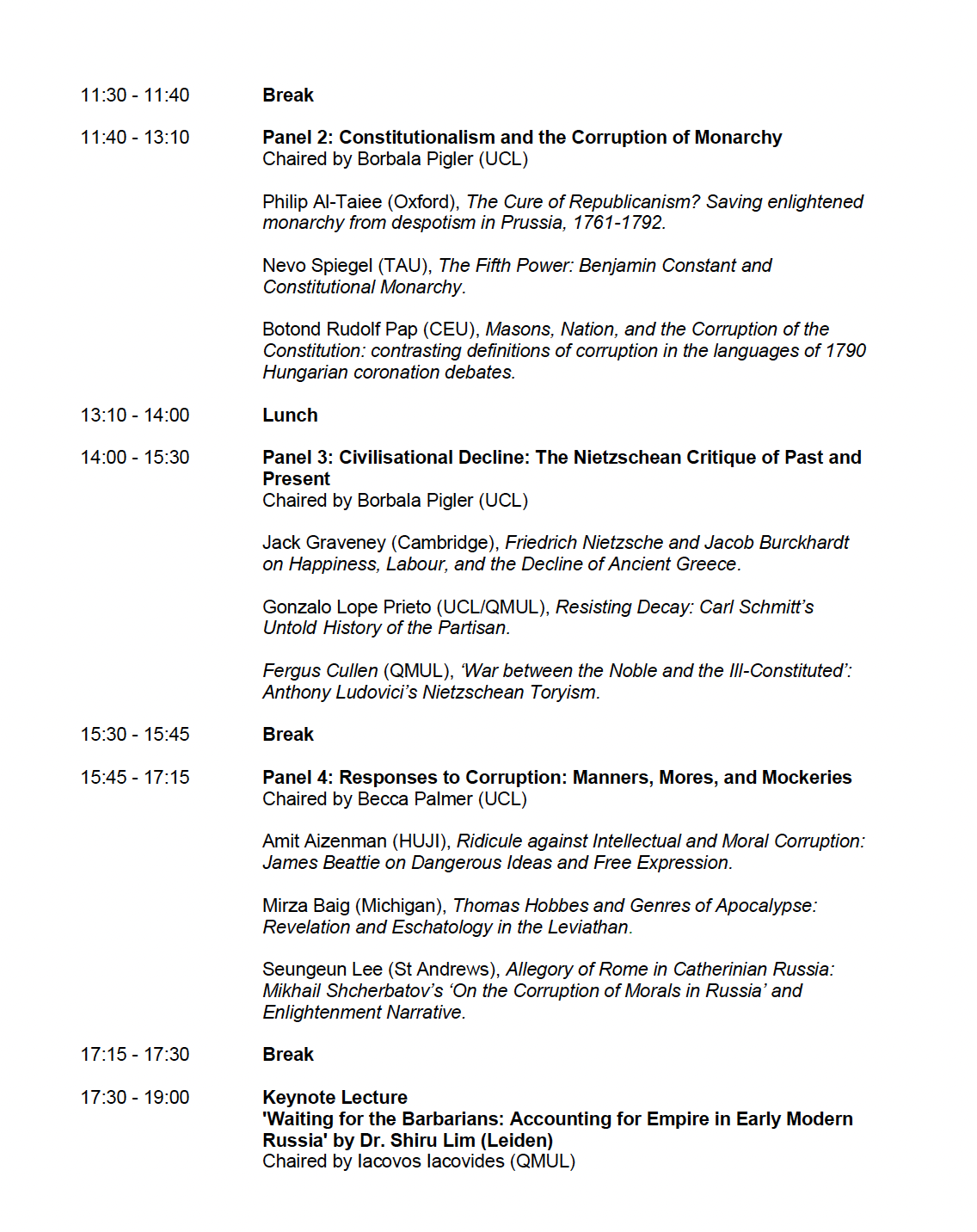
In June I attended the 17th Annual London Graduate Conference in the History of Political Thought. As several participants noted, it seemed sadly fitting to be at a conference on the theme of 'Vice, Corruption, and Decay' on the opening day of the 2026 World Cup. Despite the potentially depressing theme, the conference proved remarkably stimulating and upbeat. As always, what follows are my personal reflections on the event.
While the three words of the conference title are closely related, each has a different meaning and distinct connotations. One contrast drawn out in the papers was between cyclical and terminal decline. Platonic and Aristotelian ideas of political corruption involve states cycling through a series of constitutional models with a degeneration from one to the next. Consequently, this can be viewed as a process of constant change. By contrast the biological image of decay implies that the decline is terminal and that the result will be complete destruction or death.
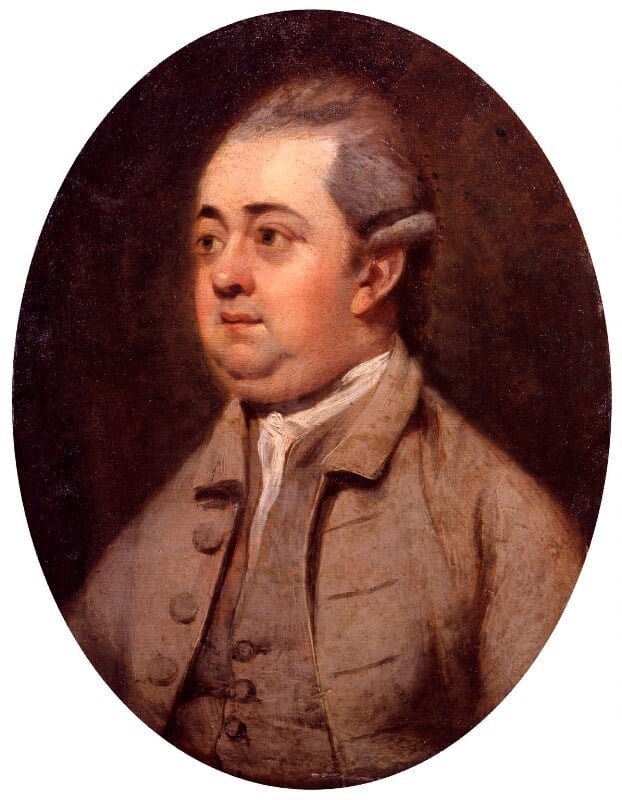
Edward Gibbon by Henry Walton, 1773. National Portrait Gallery, NPG 1443. Reproduced under a Creative Commons Licence.
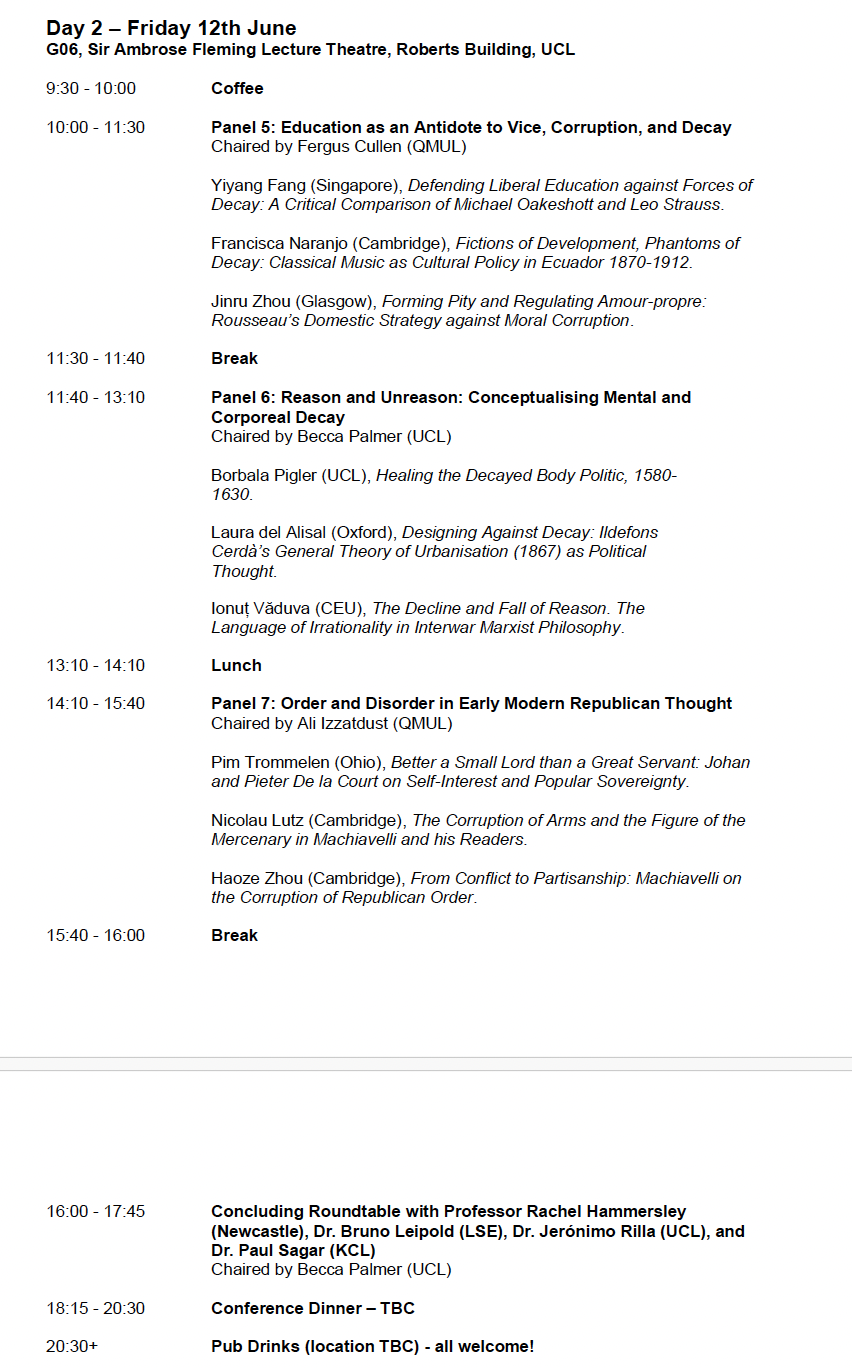
Several papers explored the possibilities for interrupting or postponing decline. Ming-Yan Shih presented the ideas of Thomas Pownall, a British politician and Governor of the Province of Massachusetts Bay. Pownall drew on the medieval idea of Translatio Imperii to suggest that the decline of the British Empire could be delayed by shifting the centre of the empire westward from London to the American continent. Similarly, Harun Ali observed that Edward Gibbon's well-known account of the decline and fall of Rome was complicated by the need for him to address the Eastern portion of the Empire, which survived the fall of Rome albeit in a state of 'premature and perpetual decay'. Harun pointed out that this means that Gibbon's 'decline' narrative is not quite what it seems. Mirza Baig's exploration of Hobbes's use of an apocalyptic narrative presented a similar disruption of the expected model. Having demonstrated that the apocalyptic was a standard literary genre at the time, Mirza went on to show how Hobbes re-temporalised that narrative. He thus presented the apocalyptic as marking the end of a world, rather than the end of the world, and consequently a moment of renewal or regeneration rather than destruction. Finally, Francisca Naranjo pointed out that progress and degeneration are not always in opposition but can exist simultaneously with degeneracy operating as a kind of shadow of development.
These issues were further explored in our closing discussion. Mirza observed that a cyclical model need not always return to the point of departure - as illustrated by the image of a spiral. Paul Sagar raised the question of whether there is a distinction between attitudes to corruption and decline on the Left as compared with the Right. Paul suggested that there is a tendency for the Right to think in terms of decline from a past golden age, whereas those on the Left are perhaps more likely to look forward to a better future. Yet Ionut Vaduva's paper provided an interesting counterpoint to this - in looking at the discourse of the decline and fall of reason in the writings of the Marxist philosophers György Lukács, Herbert Marcuse and Ernst Bloch. They perceived a contrast between the rationalism of the Enlightenment which was then developed by Hegel and Marx and the irrationalism of the ideas of counter-revolutionary thinkers such as Schelling, Schopenhauer and Kierkegaard, perhaps leading to Fascism. While Ionut's paper and other participants made clear that the picture is more complex, there did seem to be something in the notion of the Right seeing the move from aristocracy to democracy as a sign of corruption. This was, of course, central to Nietzsche's understanding, which was touched on in several papers.
Jack Graveney compared Nietzsche with his contemporary Joseph Burkhardt. For Nietzsche the slavery of the masses was necessary for the flourishing of the few. Burkhardt rejected Nietzsche's notion of the happiness of the past as an optical illusion, suggesting that Nietzsche's idea that the slave was happy on account of being free from modern delusions was a myth. Fergus Cullen showed how Nietzsche's veneration for aristocracy was picked up by the conservative Anthony Ludovici who contrasted a positive image of ancient aristocracy with a notion of modernity as marking the triumph of the weak and ugly. While not presented in the same Nietzschean vein, Gonzalo Lope Prieto's account of Carl Schmitt's idea of the partisan offered a similar notion of decline from an aristocratic original to a corrupt democratic form.
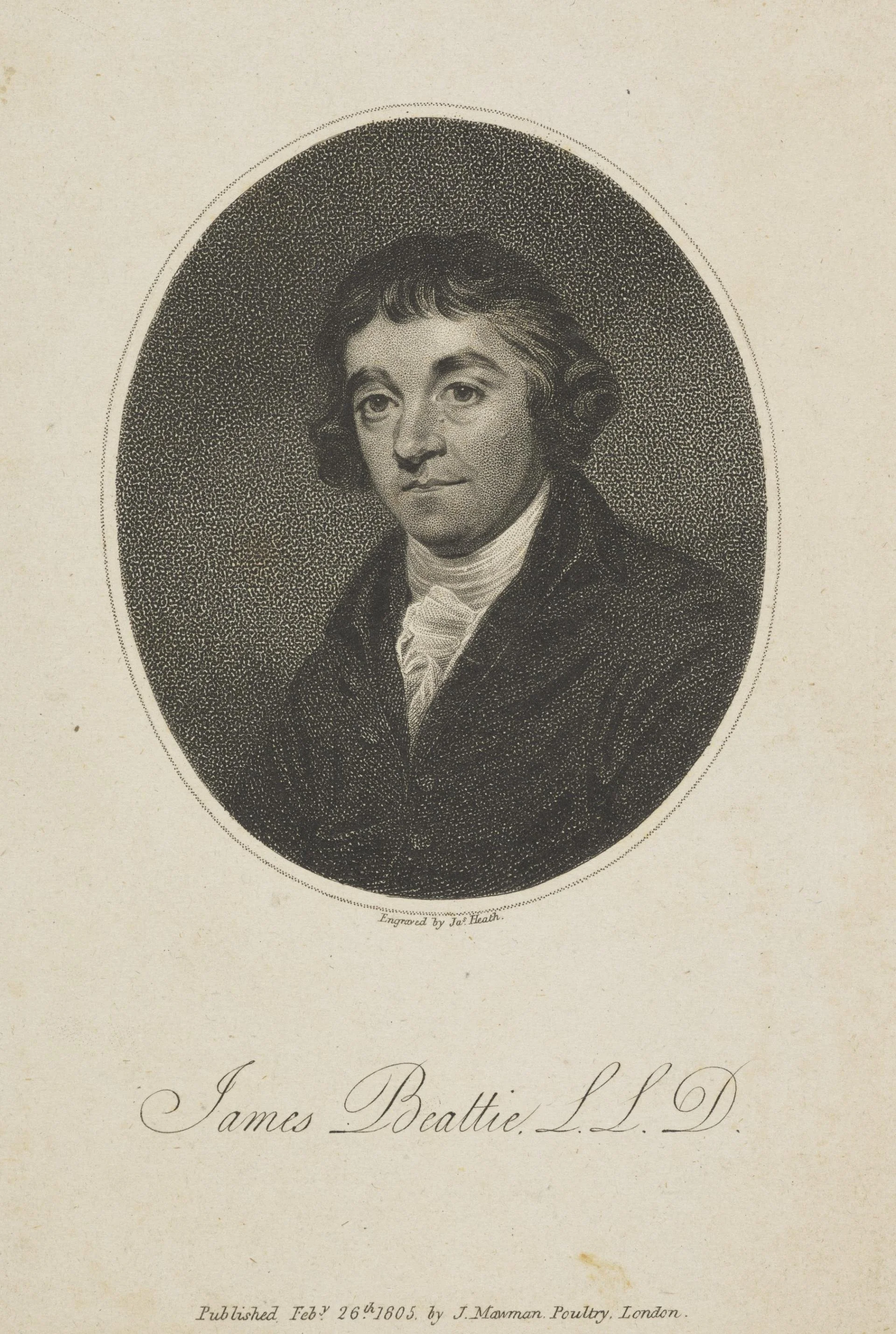
James Beattie, 1735-1803. Poet and moral philosophe. Image engraved by James Heath and published by J. Mawman, 1805. ‘National Galleries of Scotland’.
Other papers reflected the shift from aristocracy to democracy as constituting decline in more practical terms. Botond Rudolf Pap showed that for at least one of the late eighteenth-century Hungarian thinkers he studies, the nobility were the true and sole proprietors of the nation and any weakening of their power was viewed as decline. Seungeun Lee suggested that Mikhail Shcherbatov adopted a similar perspective on corruption in eighteenth-century Russia. He looked back to the noble virtues of the past and insisted on the need for the monarch to be tempered by aristocratic restraint. Similarly, Leo Strauss's concept of a Liberal Education - which was explored by Yiyang Fang - was designed to cultivate the 'perfect gentleman' and motivated by a rejection of mass democracy and culture. A similar sort of aristocratic disdain was even documented in Amit Aizenman's paper on James Beattie. Amit showed that Beattie's concern about Hume's scepticism was less about the ideas themselves, than their becoming fashionable among the general population. As Amit explained, this was why Beattie's solution was to challenge Hume's position via ridicule - since this was a means of damaging the social standing of the ideas and the philosopher associated with them.
As Botond noted, one person's decline is another's progress, and this was brought home in Pim Trommelen's paper on the De la Court brothers. In contrast to many republican thinkers, they did not favour aristocracy over democracy, nor did they believe that the cultivation of virtue was necessary to prevent corruption. Instead, they argued that the advancement of each person's self-love is an expression of the common good and on this basis argued that popular government is actually the best form. Bad behaviour on the part of the mob, they argued, is not due to human nature and so must instead be the result of material inequality. If that inequality is reduced and all are given the opportunity to participate in politics then vicious actions can be avoided.
Pim's paper was not the only one to address potential solutions to the problem of corruption. Some of the solutions explored across the 23 papers were familiar and expected, others less so.
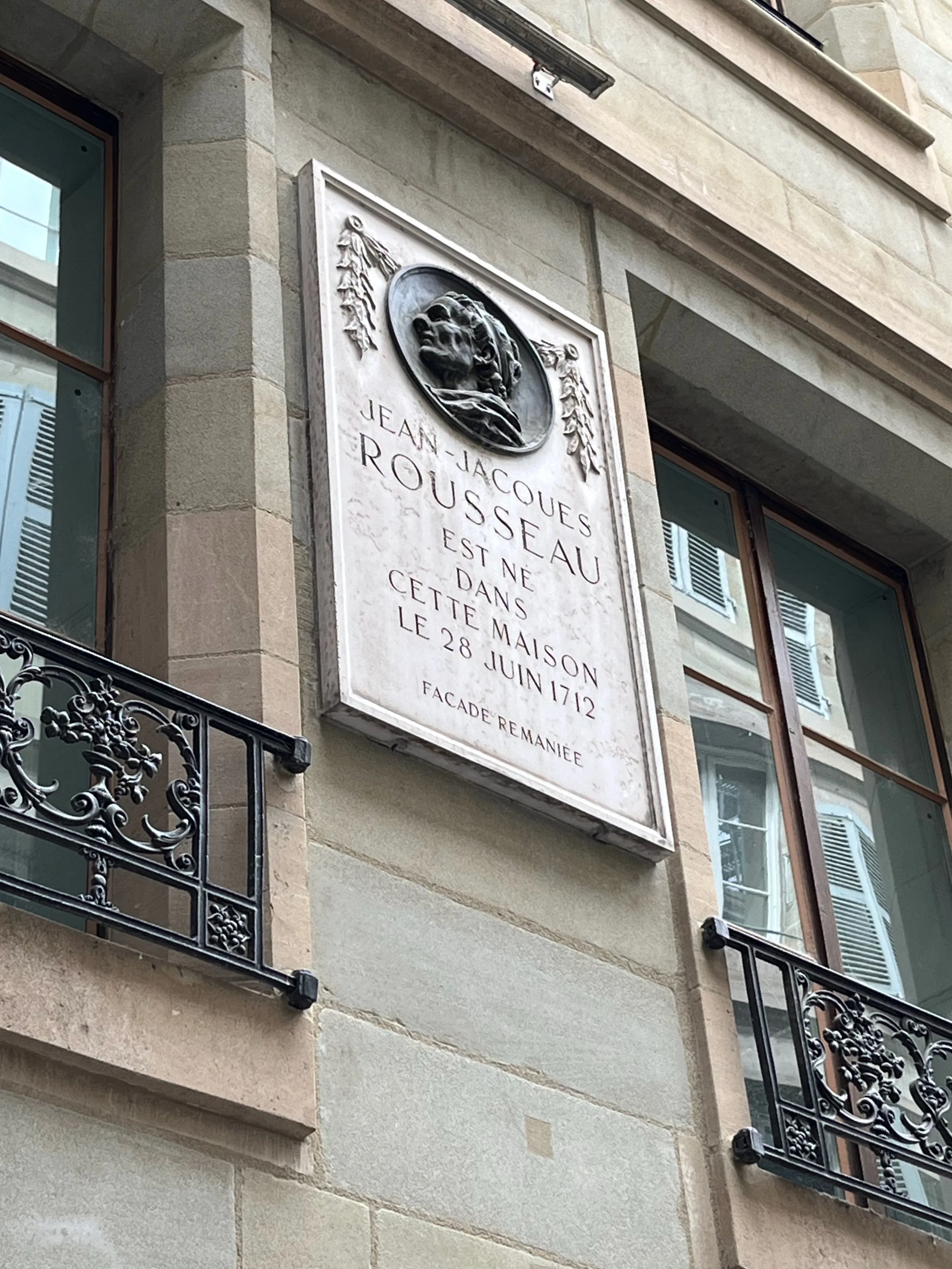
Plaque commemorating Jean-Jacques Rousseau’s birthplace in Geneva. Image by Rachel Hammersley, 2025.
Panel 5 as a whole focused on education, though what was interesting here was the diversity in how education was conceived. Yiyang compared the Liberal Education programmes of Michael Oakeshott and Leo Strauss. Both advocated reading the 'great books' in the history of political thought as crucial training, but Yiyang suggested that whereas for Strauss the goal of this programme was to seek the truth, for Oakeshott it was more about students being initiated into a tradition. Francisca highlighted the importance of music education in the new Equadorian republic in the late nineteenth century. In an historical context in which Latin America was seen as a developing region, while the West was perceived to be in decline, classical music was viewed simultaneously as a symptom of decay and a potential antidote to it. While Rousseau also valued music, his approach to addressing moral decay, as Jinru Zhou demonstrated, centred on the notion of pity. Jinru drew out the contrast between the natural pity of the Second Discourse - which is instinctive and anterior to reason - and the refined pity of Emile, which required imagination and judgement and which, if cultivated, could offer a domestic remedy to human corruption
Legal frameworks offer another conventional solution to the problem of corruption. Laws are a means of controlling the flawed behaviour of human beings and the rule of law can even constrain the actions of the ruler. In this vein, Philip Al-Taiee noted the rejection of personal decrees in a Prussian context and Botond observed that his Hungarian thinkers criticised breaches of the law by rulers such as Joseph and Maria Theresa. As Bram Sturley demonstrated in his discussion of the writings of early twentieth-century Austrian socialists, laws also have to be adapted to fit new circumstances - not least when seeking to incorporate different nationalities within the Hapsburg Empire.
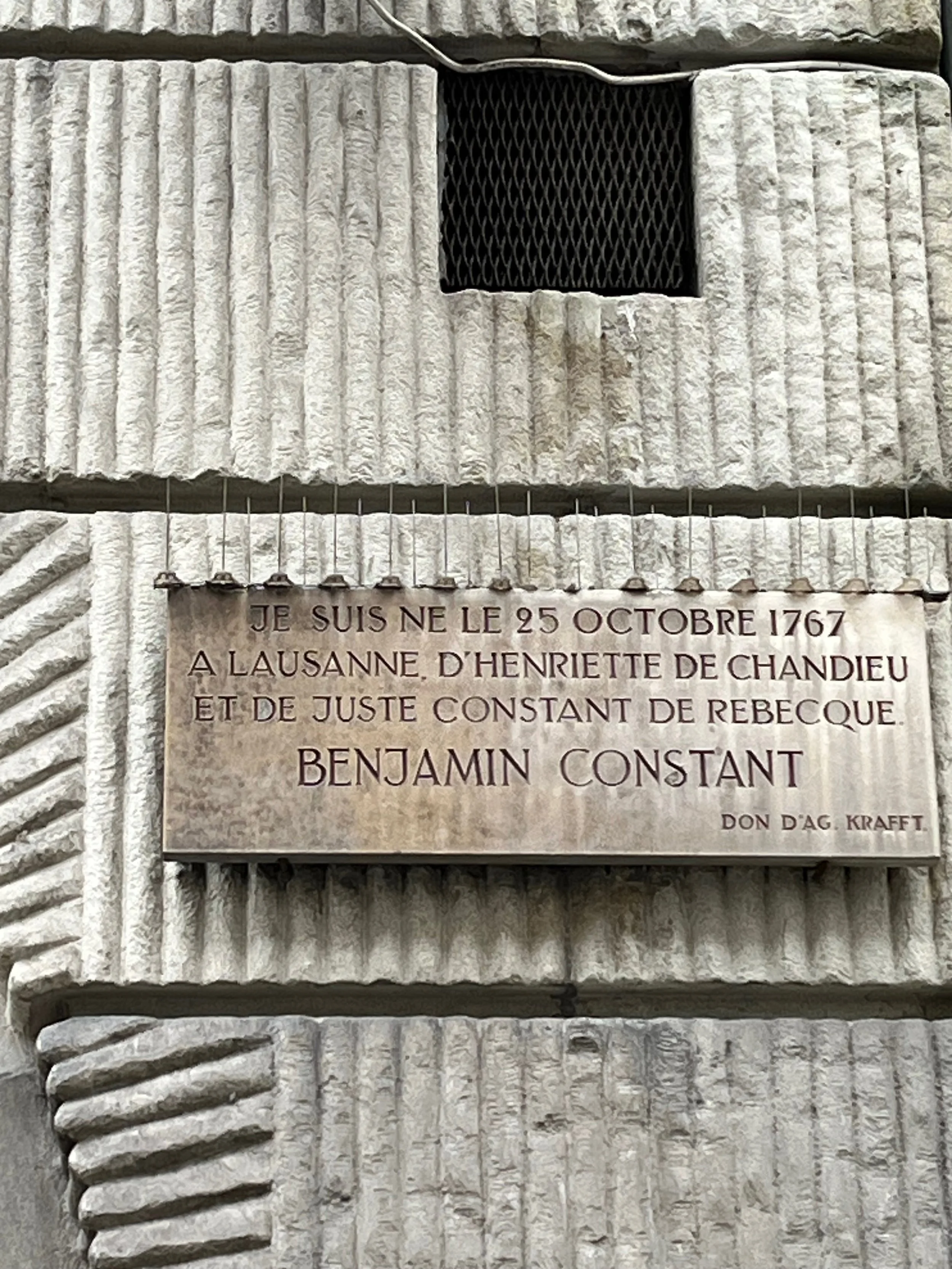
Plaque commemorating the birthplace of Benjamin Constant in Lausanne. Image by Rachel Hammersley, 2025.
Closely linked to the rule of law is the idea of a mixed constitution. The original formulation - dating back to Polybius - featured relatively little in our discussions, but we did explore modern adaptations. Philip revealed that some of his Prussian intellectuals used republican solutions to protect monarchy from slipping into despotism. In the same panel, Nevo Spiegel showed how Benjamin Constant's later writings advocated a monarch as a vertical balancing power to solve the republican problem of resolving conflicts between the legislative, executive, and judicial branches of the constitution. Pim reminded us that not all republican writers favoured the mixed constitution. Dutch thinkers like the De la Courts explicitly rejected that model on the grounds that it introduces competition into the system and so is liable to generate civil conflict.
For Machiavelli civil conflict was, of course, part of the solution rather than the problem, with active citizenship, tumults, and armed citizens all working to postpone decline. Yet, even here, the papers suggested that the story is more complex than we might think. Haoze Zhou showed that while the account offered in the Discourses is that conflict between the patricians and plebs rendered the Roman republic free and powerful, in the History of Florence civil conflict is a source of political decay. Haoze showed that the key for Machiavelli was to have conflict without sects and that this required good institutions that could contain private interests. Nicolau Lutz's paper complicated another key aspect of Machiavelli's thought - his preference for citizen soldiers over mercenaries. Nicolau showed that while Machiavelli saw mercenaries as morally corrupt, the Straussian critique of the civic humanist position, which suggested that Machiavelli believed strong leadership could make mercenaries more like citizen soldiers, is not entirely incorrect.
Interestingly religion as a solution to the problem of moral corruption was less prominent in the papers. It only surfaced in the final panel when Haoze presented religious institutions as one means by which Machiavelli thought private interests could be contained. Its almost complete absence from our discussions probably says as much about twenty-first-century intellectual historians' preoccupations as the importance of religion to the topic itself.
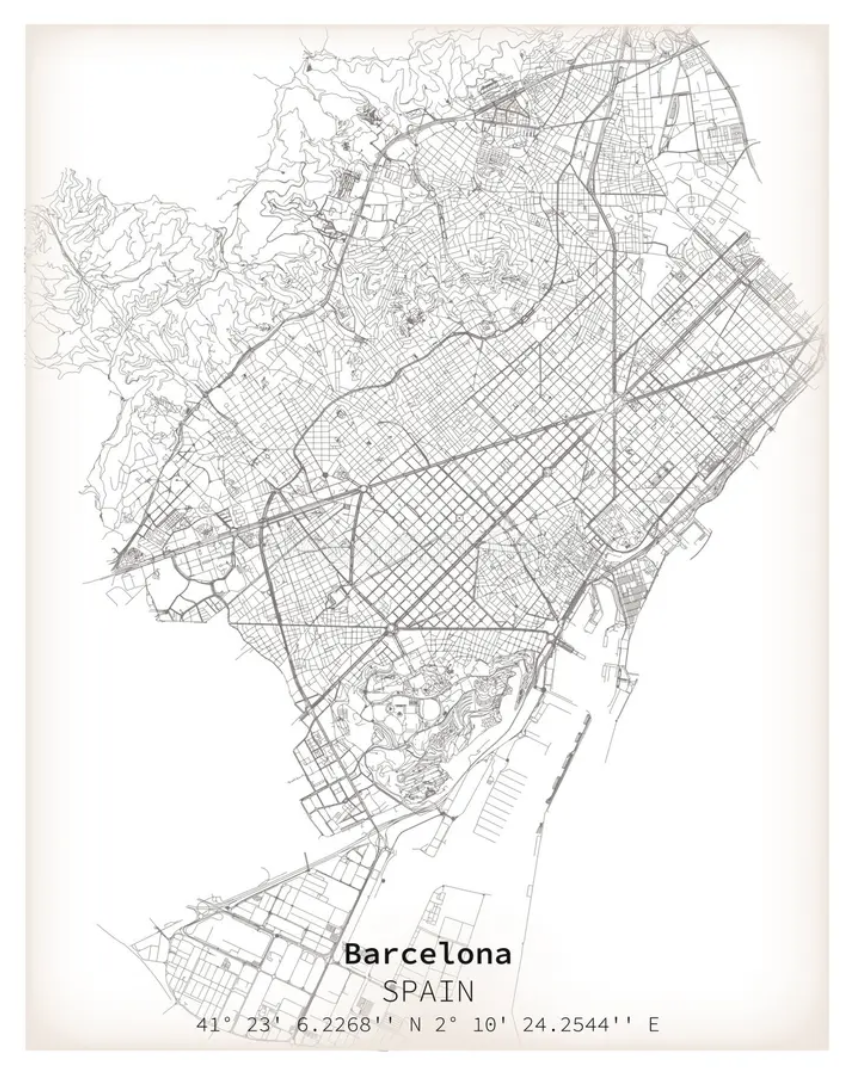
Map of Barcelona which was remodelled according to Cerdàs’s plan. Taken from narodnatribuna.info.
Alongside these conventional solutions were some that were more surprising. In her paper on the political thought of the architect Ildefons Cerdàs, Laura des Alisal highlighted Cerdàs's belief that making improvements to the environment in which people live not only improves their physical well-being but can also have moral and political implications. She convincingly argued that his book General Theory of Urbanisation, which is usually viewed as a manual for urban planners, can also be read as a text in political thought.
While imperial expansion was a source of corruption in the Roman, British, and Hapsburg cases, two papers presented it as a potential solution. Borbala Pigler showed how in early modern England, colonisation was seen as a solution to the problem of overpopulation. The issue, as she explained, was not simply quantity - that there were too many people - but also quality - the type of people - in particular those who were idle. Following medical models relating to an excess of blood, advocates of colonisation called not merely for bloodletting, but insisted on the need to purge the state of the idle by sending them to the colonies. This would both cleanse the English body politic and reform those individuals through hard work. In her keynote address Shiru Lim suggested a similar model was at work in the Russian Empire. Here Siberian exile was used as a means of purging a sick body politic by using it to absorb prisoners of war and political prisoners.
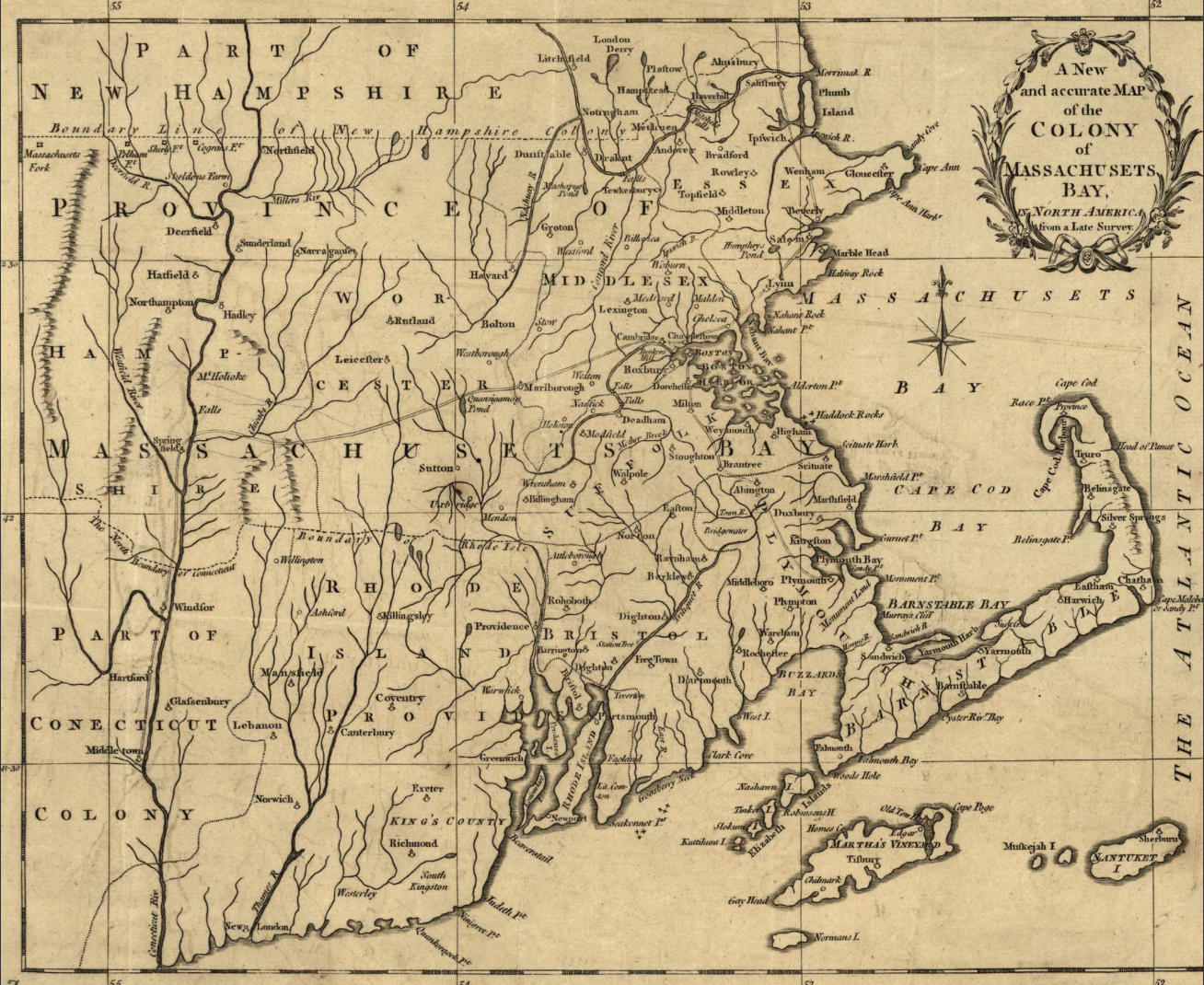
Early map of Massachusetts Bay from https://pacificpalisadesmap.github.io/new-rdcrrp-charting-the-beginnings-a-journey-through-the-map-of-the-massachusetts-bay-colony-yckbkr-pics/#
Finally, I was struck by the fact that while we did discuss Machiavelli, Hobbes, Rousseau and Nietzsche, we also had many papers on less well-known thinkers who were engaged in day-to-day politics. Ming-Yan showed how Thomas Pownall had interesting things to say about empire and imperial fragility that were influenced by his practical experiences of governing. Philip talked about his thinkers 'grappling' with the problems of the day. Nevo reminded us that constitutional theorists cannot rely solely on rules and idealisations but must attend to their particular historical moment. Perhaps the topic encouraged this practical focus but I cannot help thinking that it is also a reflection of the current state of the field. If that is the case, then we are perhaps heeding Georges Dumézil's point as highlighted in Katie Ebner-Landy's opening talk. Katie compared the methodologies of Harold Bloom and Quentin Skinner and sought to explain why the former is - to use Dumézil's phrase - now of 'mere historical interest', while the latter remains relevant. Dumézil's point was that in order to avoid decline a methodology must continue to be useful. This means that it must not simply be frozen in time but must instead be 'transformed by future generations'.