
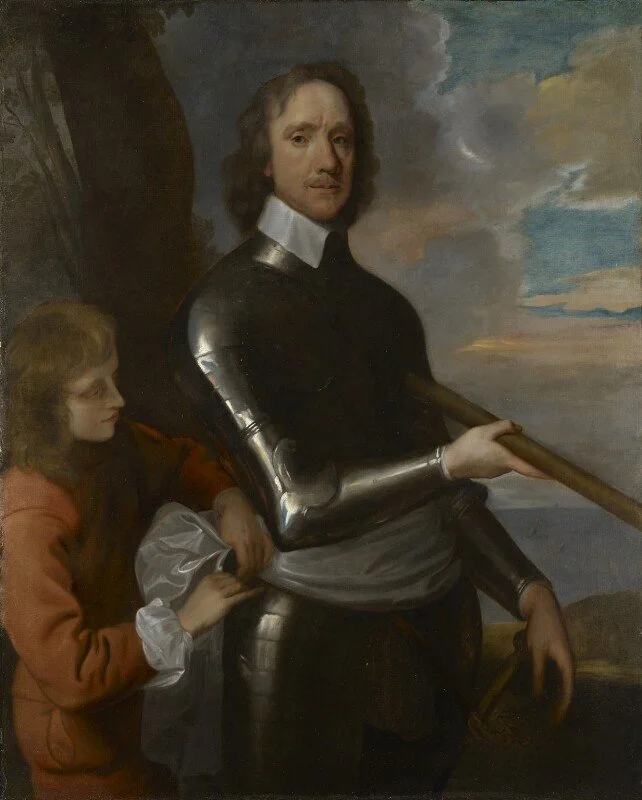
Oliver Cromwell by Robert Walker, c. 1649. National Portrait Gallery. NPG 536. Reproduced under a Creative Commons Licence.
At the end of April I spoke at the annual meeting of the Cromwell Association, which this year was held in Newcastle. When I was invited to speak I was slightly concerned as I knew that Oliver Cromwell himself had relatively little to do with the region in which I live. His only visits (as far as we know) took place during the period known as the third Civil War on his way to and from Scotland. He was in Newcastle on 9-10 September 1648 following his victory at the Battle of Preston, and again on 17-19 October on his return south. He visited again in mid-July 1650 on his way to Dunbar, where he once more led his troops to a decisive victory. He also visited in August 1651, when he stayed first at Newburn, to the west of the town, on the 12th and then in Newcastle itself two days later (Peter Gaunt, The Cromwellian Gazeteer (London, 1987). These visits were largely uneventful and it was difficult to see how I would put together a 45 minute talk about them. Fortunately, I was reassured that my talk did not need to focus just on Cromwell, but could explore the role of the North East in the Civil Wars and Interregnum more generally. On this wider topic, I already knew I had much more to say. The North East played a crucial role at several points during the Civil Wars. Moreover, while Cromwell had little to do with the region, other key figures were deeply and directly involved with Newcastle and its surrounding area.
I have researched this topic myself, partly to add a local dimension to my Special Subject on the British Revolutions that I taught for many years, and also as part of projects involving local school students. Yet my knowledge has also been enhanced by several dissertation students who have written excellent dissertations on our region during the Civil War; most recently Lucy Delaney and William Atkin. What follows owes much to their excellent detective work as well as to my own research
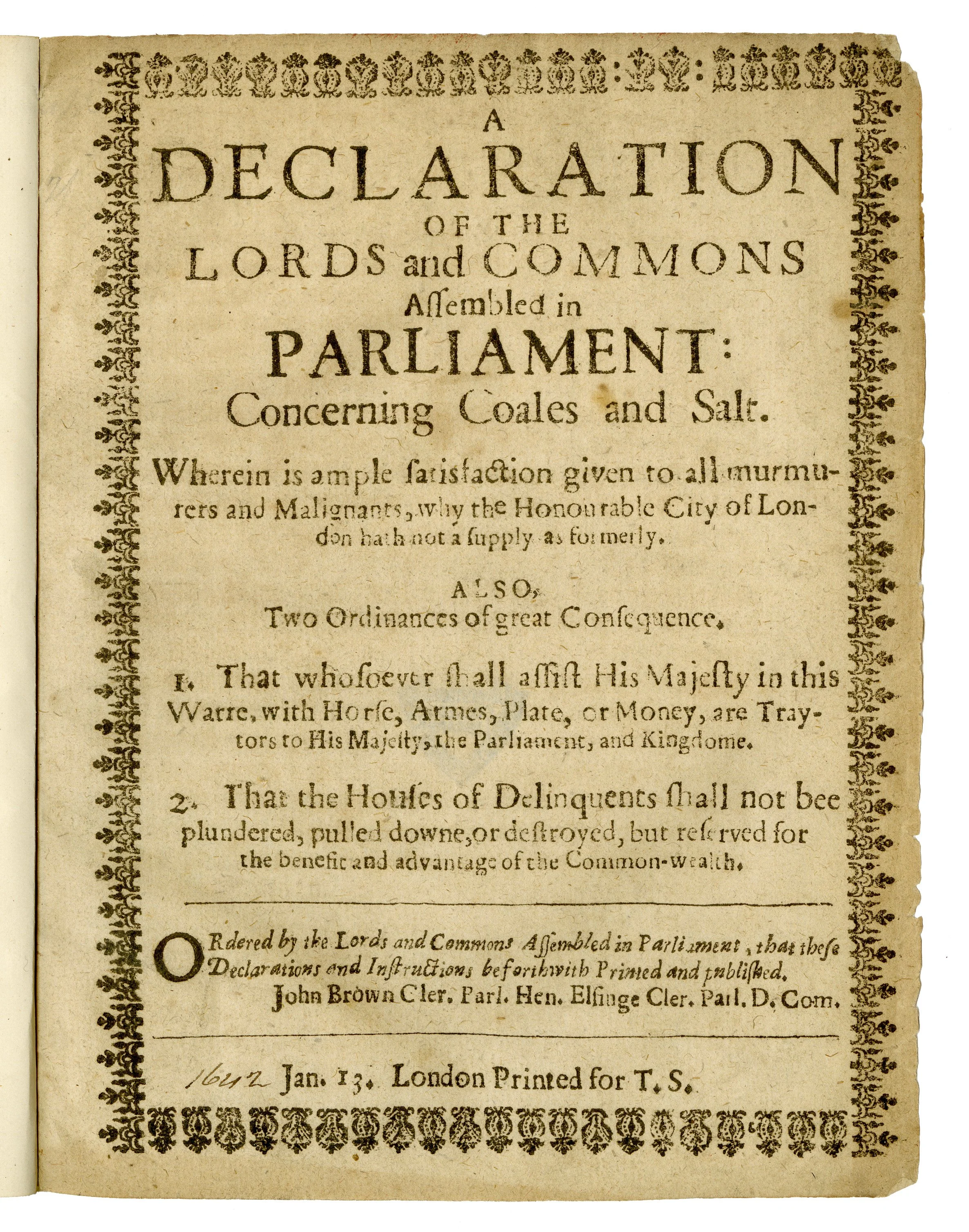
Pamphlet relating to the coal trade from 1642. Philip Robinson Library, Newcastle University. Special Collections. Bradshaw Collection. Brad 942.062 PAR. Reproduced with kind permission.
The first thing that needs to be understood is just why the North East was important during this period. Newcastle was, after all, a long way from the centres of political activity at London and Oxford. Stagecoach services between London and Newcastle were only established during the 1650s and even then the journey took the best part of a week. Consequently the North East must have felt a long way from where the main political action was taking place. Yet, this area was important for two reasons. First its proximity to Scotland. Newcastle is located just over 50 miles south of the Scottish border and it is the first major English town on the road from Edinburgh. This made it important during the Bishops' Wars of the late 1630s, when Charles was at odds with his Scottish subjects, and later when the Scottish Covenanters joined the Civil War on the Parliamentarian side. The second key factor was coal. The northern coalfields provided a significant proportion of the country's coal supplies. By 1650 Newcastle was said to be exporting 300,000 tons of coal per year. Moreover, it was the key source of fuel for the capital, since coal could easily be shipped out of the Tyne and down the east coast to London. This meant that whoever controlled access to the Tyne wielded considerable power. These two factors determined most of the key events that took place in the region during this period, including the Battle of Newburn (27/28 August 1640), the Siege of Newcastle (August to October 1644), the imprisonment of Charles I in Newcastle following his defeat in the First Civil War (May 1646 to February 1647), and the turning of Tynemouth Castle during the Second Civil War (August 1648). This last event was the subject of Lucy Delaney's dissertation.
Rather than describe those events here, in what follows I will focus instead on four key figures who, unlike Cromwell, did have a significant connection to the region.
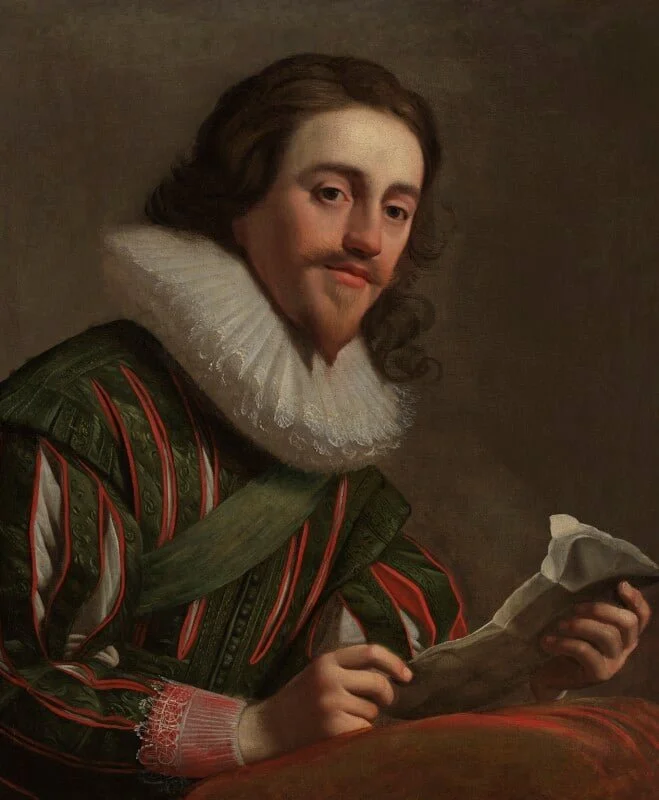
King Charles I by Gerrit van Honthorst, c. 1628. National Portrait Gallery. NPG 4444. Reproduced under a Creative Commons Licence.
King Charles I made four visits to the region during his reign, one of which involved an extended stay. He first stopped in Newcastle on his way to his coronation in Scotland in 1633, making a state entrance into the town on 3rd June. He visited again between 5 and 22nd May 1639 in the midst of the Bishops' Wars. On this occasion he brought a printer and printing press to the town for the first time because he needed a printer with him to type his orders and proclamations. Robert Barker arrived in the town in early May. Somewhat incongruously, given the troubles of the time, the earliest printed item bearing a Newcastle imprint is a broadside proclamation about butter (Richard Welford, 'Early Newcastle Typography 1639-1800', Archaeologia Aeliana, 3rd series, III, pp. 1-2). Barker went on to print several other items including a sermon by Thomas Morton, the Bishop of Durham, and the Laws and Ordinances of Warre before he continued on to Scotland with the King. Just over two years later Charles was back in Newcastle again when the Scots were occupying the town following the Battle of Newburn. Most demeaning of all, Charles was brought to Newcastle as a prisoner having surrendered to the Scots at the end of the first Civil War in 1646. Since the Scots were still in control of the North East following the relief of the Siege of Newcastle in October 1644 there was no need for them to take their royal prisoner any further than Newcastle. John Rushworth described the moment when the King arrived:
The next Day after the Articles of Newark were sign'd, the Scots Army took their
March Northwards, his Majesty being with Lieutenant-General Lesley in the Van of
them and on Wednesday, May 13 came into Newcastle; a Lane of Musquets and
Pikes being, by Order from Sir James Lunsdale, the Governor, made from Gateshead
(the Place where his Majesty entered the Town) all along the Streets to the General's
Quarters, where his Majesty took up his Residence.
(John Rushworth, Historical Collections of Private Passages of State: Volume 6, 1645-47.
London, 1722. British History Online https://www.british-history.ac.uk/rushworth-papers/vol6/pp249-276 p. 271).
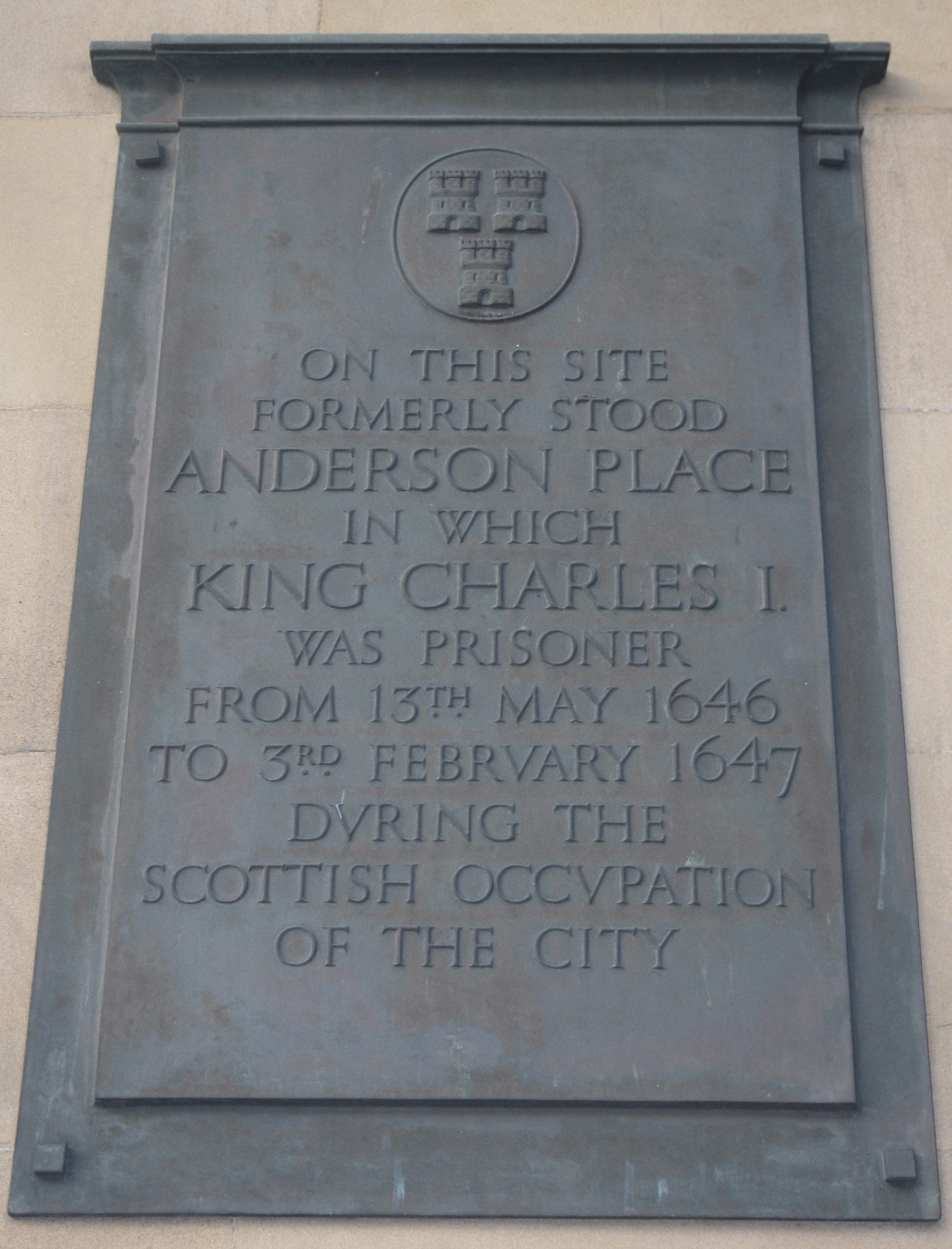
Plaque on Market Street in Newcastle marking the location of Anderson Place where Charles I stayed while he was being held captive in the town.
Charles spent almost nine months in the town, living at Anderson Place, said to be the biggest private house within the walls of a city anywhere in the country at the time. Despite being held prisoner, the King was afforded various privileges:
[King Charles] was no where treated with more honour than at Newcastle, as himself confest, both he and his train having liberty every day to go abroad and play at goff [golf] in the Shiel Fields without the walls, till a design for his escape was discovered, which occasioned stricter orders to be sent down concerning his person. (Memoirs of the Life of Mr. Ambrose Barnes, Late Merchant and sometime Alderman of Newcastle upon Tyne. London, 1867, p. 54)
Today there is a tower block in Shieldfield that bears the King's name and a plaque nearby mentions his golf playing
Moving on to my second key figure, the leading Parliamentarian, and committed republican, Sir Arthur Haselrig also spent considerable time in Newcastle. Having played a crucial role in the build up to the Civil War, Haselrig was appointed governor of Newcastle in December 1647 and given responsibility for the military forces in the region. Haselrig's role in the North has been the subject of William Atkin's dissertation. He has discovered that there has been some debate over Haselrig's record in the North. He was accused at the time of using his position to advance his own interests, not least in acquiring extensive property in the region. While there seems to be some truth to these accusations, William has also found evidence that Haselrig was a canny politician who was thoughtful about the decisions he made and balanced the need to maintain working relationships with his political and religious principles.
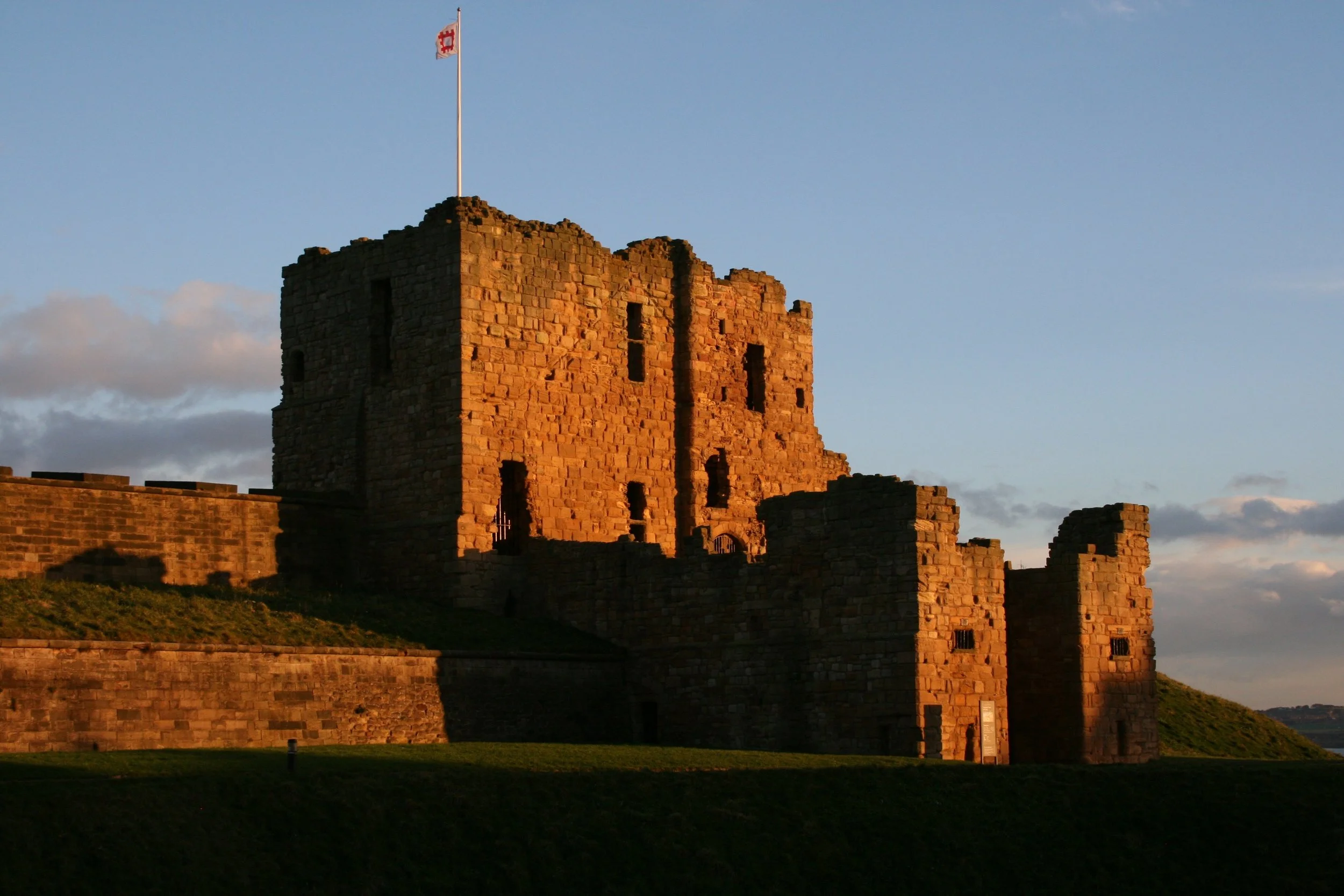
Tynemouth Castle. Image, John Gurney.
Haselrig was also successful militarily. In July 1648 he succeeded in defeating Colonel Edward Grey's band of Northumbrian royalists, and in August 1648 he successfully secured the recapture of Tynemouth Castle after the Governor's sudden defection. Following this, Haselrig was keen to remind Parliament of the importance of the region for the whole country.
Let London especially remember this for unlesse so happily regained, no more Coles could be
expectted this year.
...
If the trafique for coales between London and Newcastle, should be stopt, you in the Southerne parts would be sencible of it' (Sir Arthur Hesilrige's Letter to the Honorable Committee of Lords & Commons at Derby House... London, 1648).
Due to this importance of the North East for the whole country, Haselrig was able to secure a warrant for work on Tynemouth castle in October 1649.
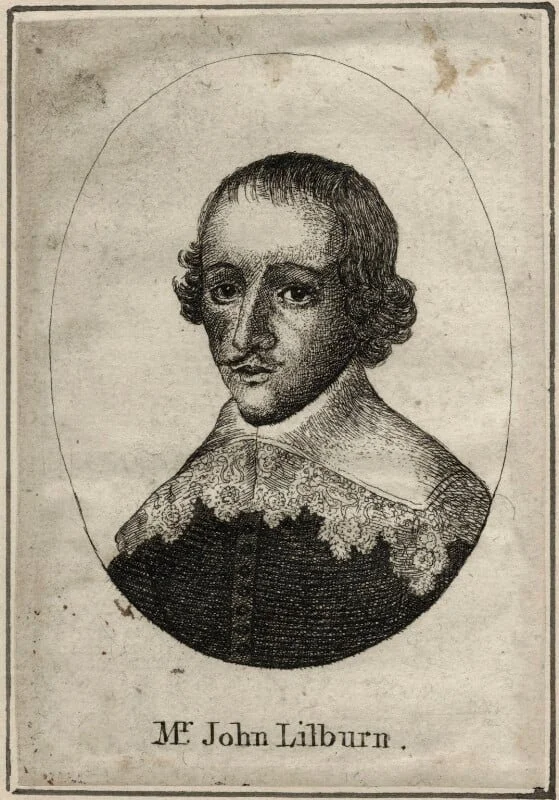
John Lilburne, possibly by Wenceslaus Hollar. National Portrait Gallery. NPG D27909. Reproduced under a Creative Commons Licence.
Though ostensibly on the same side in the national conflict, Haselrig had several run-ins with members of the Lilburne family. The family held lands and exercised influence in County Durham, and the Leveller leader John Lilburne claimed to have been brought up in the best schools in the North, including Newcastle Grammar School where he learned some Latin and Greek (John Lilburne, Innocency and Truth Justified. London, 1645/6, p. 8). John's uncle, George Lilburne, came into conflict with Haselrig on several occasions over sequestration of land in the region. These land disputes, as Lucy Delaney has shown, may also help to explain the events of August 1648, since it was John's brother Henry who was the Governor of Tynemouth Castle, and who suddenly transferred his allegiance to the King.
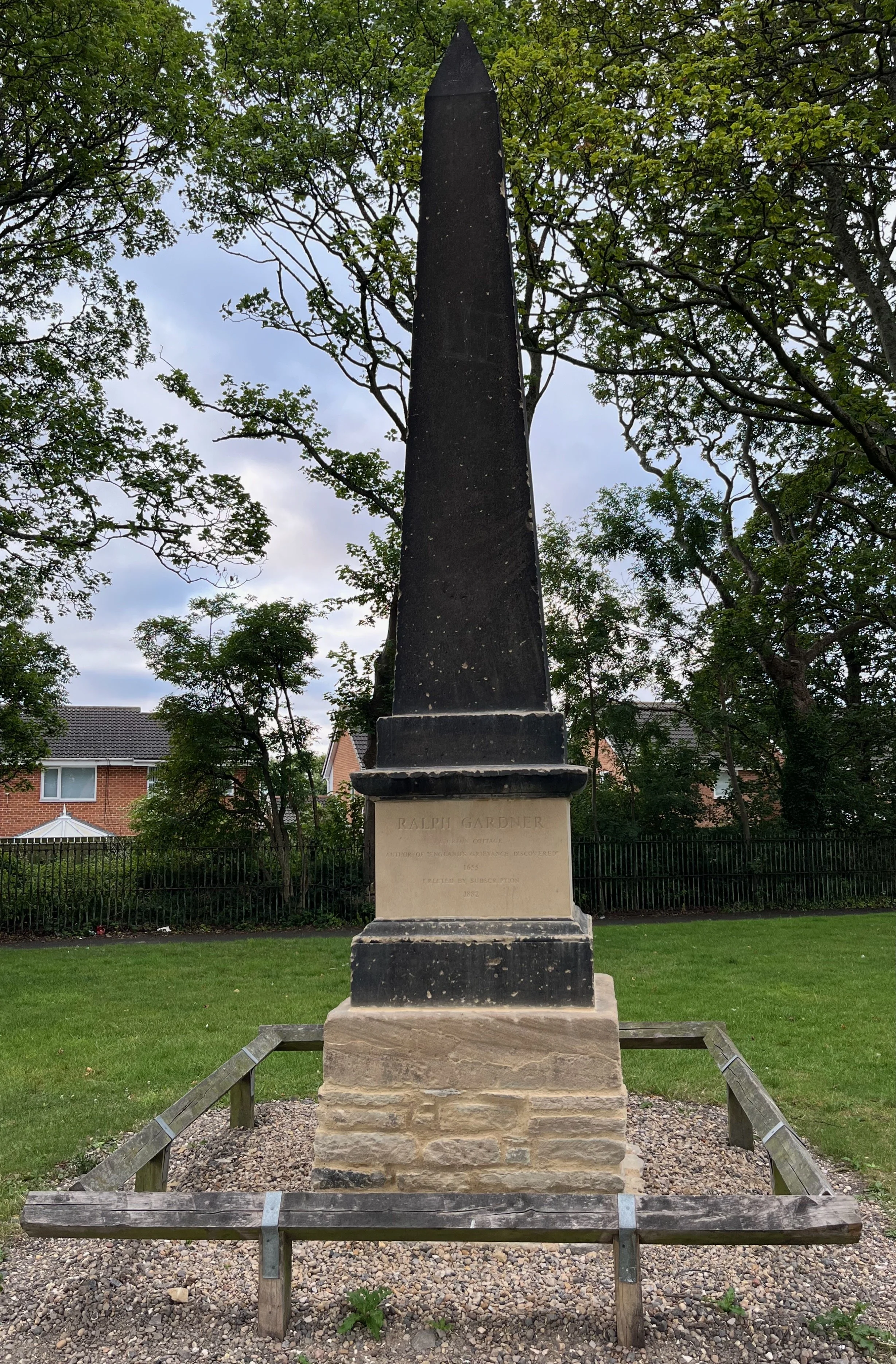
The Ralph Gardner memorial in Chirton, North Shields. Image by Rachel Hammersley.
In February 1649, immediately following the regicide, John Lilburne published England's New Chains Discovered in which he argued that, although King Charles himself had been executed, tyranny remained. Just over five years later a man from North Shields repeated the argument and turned it to local matters. England's Grievance Discovered, which was addressed to Cromwell as Lord Protector, was written by Ralph Gardner, a local businessman involved in the brewing and coal trades. Writing on behalf of the people of North Shields, who relied on the river, Gardner argued that the Newcastle Corporation was behaving tyrannically in its control over shipping on the Tyne. Gardner praised the Lord Protector for having brought order to the country, but then drew Cromwell's attention to the 'abuse of the Coal-Trade' in the region expressing his hope that Cromwell might bring relief for the oppressed.
The North East may have been (and in some ways still is) remote from London, but it has often played an important role in national events, not least during the mid-seventeenth century. Perhaps Cromwell should have taken more of an interest in the region than he did!